Outdoor clinic - Miss Slack left, Dr. Kabassian in action
Location
Jib Ramley, Syria
Year
c. 1931–1933
Context
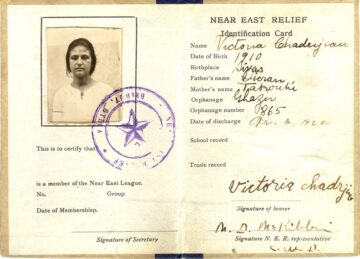
Annie Earle Slack (1885–after 1941) was a Near East Foundation nurse in Syria from 1930 to the late 1930s. Born in St. Kitts, British West Indies, she trained at New York Hospital (graduating 1914) and served with French and American medical units in France and Romania during the First World War. She naturalized as a U.S. citizen in 1929 and was recruited by Barclay Acheson to lead a new NEF rural health program. Arriving in Aleppo in March 1930, she received her ambulance and medical supplies that August and ran the NEF Healthmobile — a truck-based mobile clinic — across the Sanjak of Alexandretta and the Masyaf district of the Latakia governorate. From 1933 her base was Massyaf (Masyaf). She worked alongside Dr. Hagop Kabassian and a team of five nurse-assistants, several of them former Near East Relief orphans, and the unit served Armenian resettlement villages and surrounding rural communities with clinical care, malaria prophylaxis, maternal and infant health, and village sanitation.
Some materials may be protected by U.S. copyright law. Materials are presented for non-commercial research and educational use under fair use. Uses beyond fair use may require permission from the copyright owner. Responsibility for rights determination and compliance rests with the user. If you believe you hold rights in this material or have information about rights holders not currently reflected, please contact [email protected].