About Us
Our Mission
The Near East Relief Historical Society preserves, documents, and interprets the history of America’s response to the Armenian, Greek, and Assyrian Genocides. Through a digital museum, searchable archive, and public programming, NERHS supports family research, public education, and scholarly inquiry.
Institutional Identity
NERHS is a specialized initiative of the Near East Foundation (NEF), the 1930 legal successor to Near East Relief. We operate with curatorial and editorial independence, dedicated to archival preservation and public education, and we draw on the institutional stability and long legacy of our parent organization.
Staff
Charles Benjamin
Interim Executive Director
Sona Viola
Director & Museum Curator
Board
John Ashby
CEO, Near East Foundation
Charles Benjamin
Interim Executive Director
Global Scholars Network
Vicken Babkenian
Australia
Garo Derounian
Lebanon
Lefteris Zorzos
Greece
Our History
A Legacy Born of Crisis
Near East Relief emerged during World War I, as reports from diplomats, missionaries, journalists, and survivors described mass violence, deportation, and starvation in the Ottoman Empire. An estimated 1.5 million Armenians were killed, alongside hundreds of thousands of Assyrians and Anatolian Greeks.
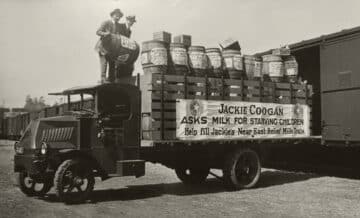
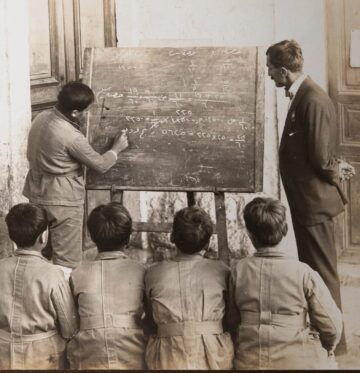
Between 1915 and 1930, ordinary citizens in the United States raised more than $116 million (equivalent to over $2 billion today) to support relief work. This nationwide mobilization provided life-saving assistance to more than a million refugees. It cared for more than 132,000 orphaned children through orphanages, hospitals, relief stations, and vocational schools across the eastern Mediterranean and the Caucasus.
From Relief to Development
Beginning in the mid-1920s, the organization made a deliberate shift from emergency relief to longer-term rehabilitation and community development. In 1930, Near East Relief became the Near East Foundation (NEF), reflecting an expanded mission that continues to this day.
The Foundation’s early community-based approach anticipated practices that would later become central to international development and humanitarian action. NEF continues this development and humanitarian work in the Middle East and North Africa, while NERHS remains dedicated to preserving and interpreting the history of the 1915–1930 era.
The Digital Museum and Archive
The original records of this massive operation are dispersed across institutional repositories and private collections. The Digital Museum and Archive was created to address this challenge by improving access and supporting discovery across collections.
The platform serves as a central portal where users can discover photographs, diaries, correspondence, publications, and organizational records, regardless of where the physical originals are located.
The Collections
The Digital Archive includes primary materials from the Near East Foundation records housed at the Rockefeller Archive Center, alongside digital surrogates from partner institutions and public sources. By bringing these resources together, we help researchers identify meaningful connections across collections that would otherwise be difficult to see. Our holdings include:
Institutional Records
Board minutes, situation reports, and operational files that document how the relief work was organized.
Government & Diplomatic Records
Official correspondence and diplomatic cables that frame the geopolitical context of the relief effort.
Personal Papers
Letters home, field diaries, and private journals that record daily work and conditions.
Visual History
Field photographs, portraits, and documentary images preserved in personal and institutional albums.
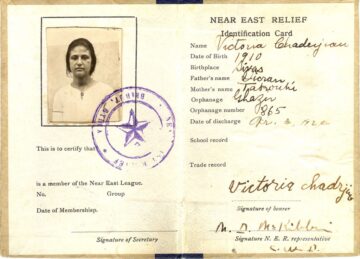
A Note of Scope: Our records focus on the rescue, care, and rehabilitation work that followed mass violence and displacement. We have limited information on individual children and do not have comprehensive name lists for orphanages or facilities. Where individual records exist, they are uneven and often incomplete. We encourage users to combine family knowledge with facility names, locations, and date ranges when searching.
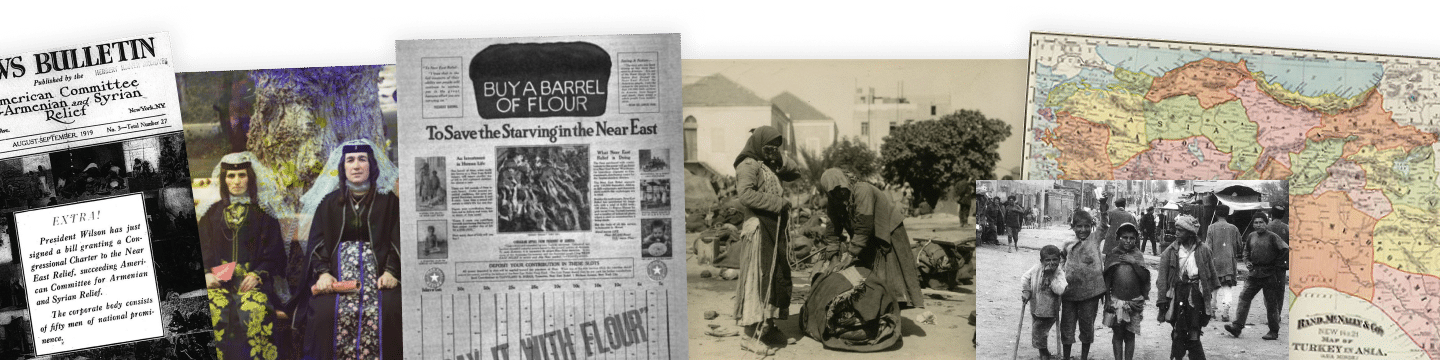
Share Your Family’s Story
We view the archive as a living resource. For many descendants, engaging with these records is a way of creating meaning from inherited silence. We welcome contributions of family photographs, diaries, letters, and documents to help complete the historical record.
Physical Preservation & Digitization
In some cases, and in consultation with contributors, NERHS may be able to explore options for long-term preservation of original materials through established archival partners. We also digitize privately held materials, when appropriate, so that personal family histories can be linked to the public record while originals remain with families. To contribute, contact our curator at [email protected] to discuss donating physical items or sharing digital copies. We do not accept general opinion pieces or essays with copyright restrictions.
Support the Mission
Your support allows us to continue documenting and sharing this history. Financial contributions sustain archival care, the processing of new digital materials, and the creation of educational resources.