
Rights & Use Policy
Purpose and Scope
This policy explains how the Near East Relief Historical Society (NERHS) presents historical materials through its digital museum and archive and how rights information is communicated to users. It does not grant permissions or licenses and does not replace the policies of the institutions that hold the original materials.
NERHS is a non-profit scholarly and educational organization. Materials are presented for research, interpretation, and discovery, with clear attribution and links back to the original holding institutions.
Ethical and Historical Context
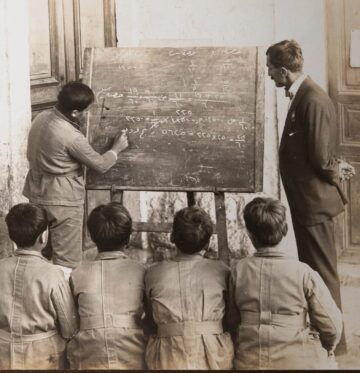
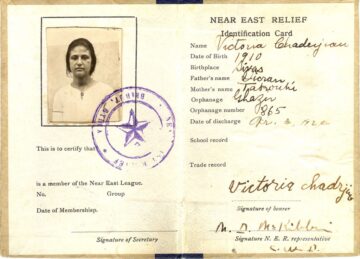
Some materials on this site depict individuals, including children, in historical contexts of genocide, displacement, conflict, or humanitarian aid. These materials are presented for research and educational purposes with care and respect for their historical and human context.
How Rights Are Described on This Site
Each item on the NERHS website includes a Rights note. That note uses one of the standardized statements below. The statement is intended to help users understand the likely rights posture of the item and the expectations for reuse.
1. No known copyright restrictions
Rights statement you may see:
- No known copyright restrictions. Based on available information, NERHS is not aware of copyright restrictions on this material. Users are responsible for determining rights status and compliance with applicable law.
What this means: NERHS is not aware of active copyright restrictions for this item. This may be because copyright has expired, the work is believed to be in the public domain, or no evidence of active restrictions has been identified. Attribution and citation remain expected.
2. Materials may be protected by U.S. copyright law
Rights statement you may see:
- This material may be protected by U.S. copyright law. It is presented for non-commercial research and educational use under fair use. Uses beyond fair use may require permission from the copyright owner. Responsibility for rights determination and compliance rests with the user.
What this means: The item may still be in copyright. NERHS makes it available for on-screen viewing in a scholarly, non-commercial context consistent with fair use. If you wish to reuse the material beyond fair use, particularly for commercial purposes, you may need to identify and obtain permission from the rights holder.
3. Rights status varies by item
Rights statement you may see:
- Rights status varies by item. Some materials may be protected by U.S. copyright law. Items are presented for non-commercial research and educational use where applicable. Users are responsible for determining rights status and securing permissions for uses beyond fair use.
What this means: The item appears within a broader group (such as a folder, album, or collection) that includes multiple creators or formats. Rights may differ from one item to the next. Users should evaluate rights on an item-by-item basis, especially for reuse beyond fair use.
4. This material is subject to restrictions
Rights statement you may see:
- This material is subject to restrictions. Permission from the rights holder or holding institution may be required for access or reuse. Please consult the source repository for additional information.
What this means: The holding institution or other constraints, such as donor terms, privacy considerations, or legal restrictions, may limit access to or reuse of the material. NERHS provides attribution and links to the source repository so users can consult applicable conditions.
5. This material is licensed under Creative Commons
Rights statement you may see:
- This material is made available by the holding institution under a Creative Commons license, or dedicated to the public domain under CC0. The specific license is identified on each item.
What this means: Each asset displays the specific Creative Commons license that governs its use, including the version (for example, CC BY-NC-ND 4.0 or CC BY-NC-ND 3.0). Users must follow the terms of that license, including any attribution, non-commercial, or no-derivatives conditions it specifies. NERHS provides no rights beyond those granted by the license itself; for any use outside its terms, please consult the holding institution.
Attribution and Source Links
NERHS provides clear attribution for each item and, whenever possible, links back to the holding institution’s catalog or finding aid. Users should cite materials using the creator (if known), date, title or description, holding institution, and the persistent link to the source record.
NERHS does not grant permissions or licenses for reuse. Commercial reuse, redistribution, or licensing may require permission from the rights holder and/or the holding institution.
Rights Questions, Corrections, and Takedown
If you believe you hold rights in material presented on this site, or have information about rights holders not currently reflected, please contact [email protected].
NERHS reviews credible rights concerns promptly and in good faith. Where appropriate, access to specific items may be temporarily disabled while the matter is evaluated. Temporary takedown does not constitute an admission of wrongdoing.