
Collections
Harpoot cares for 4,500 children. NER Weekly, 30 Oct 1920.
Location
Constantinople (Istanbul), Turkey
Year
1920
Item Detail
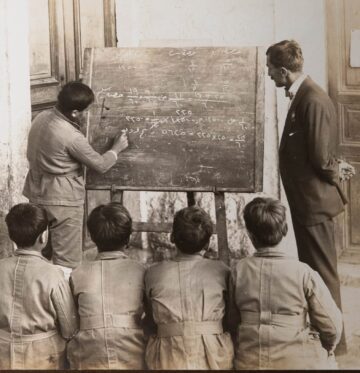
Mark H. Ward's survey of Harpoot is the body of this issue. About 4,500 children were held in thirty-eight institutions under nineteen American workers, among them a nursery for fifteen mothers and their babies, a home for twenty-five blind children equipped from the former German school at Malatia, two tuberculosis sanatoria, and a separate house for crippled children for whom ordinary orphanage life was too strenuous. Each regular orphanage held about a hundred children under a local mother and an older girl. The issue opens with the death of Martha Hamilton Peet, whose Constantinople funeral was attended by the Patriarch Zaven and Admiral Bristol.
Context
The Near East Relief Weekly Bulletin was a four-page weekly printed in Constantinople for the organization's own staff. It continued The Acorne, the bulletin of the American Committee for Relief in the Near East, and took the new title with Vol. II, No. 42 on 23 October 1920, when the organization itself was renamed Near East Relief.
Because it was written for people already in the field and not for donors at home, the Weekly is plainer than anything Near East Relief printed in America. Station reports give the numbers (e.g., children fed, beds occupied, pairs of shoes made, tons landed at Batoum) and the personnel notes record who arrived, who transferred, who married and who died.
The run covers the fall of Kars, the landing of Russian refugees in Constantinople in the winter of 1920, the famine in Armenia through 1921 and 1922, and the French withdrawal from Cilicia.
-
Holding Institution
Columbia University Library
-
External Link
-
Attribution
Digitized by Columbia University Libraries; available through HathiTrust (Public Domain).
-
Rights
No known copyright restrictions. Based on available information, NERHS is not aware of copyright restrictions on this material. Items are presented for non-commercial research and educational use. Users are responsible for determining rights status and compliance with applicable law. If you believe you hold rights in this material or have information about rights holders not currently reflected, please contact [email protected].
-
Notes
Masthead: 'Near East Relief. Vol. II. No. 43. 25 Rue Taxim, Pera, Constantinople. October 30, 1920.'
Most of the people described in these pages were survivors of the genocide of the Ottoman Armenians and of the killing and deportation of Greeks and Assyrians in the same years. The bulletin does not use the word "Genocide," which was not coined until 1944. Its writers say "the deportations", "the massacres", or simply "the troubles", and often say nothing at all about how a child came to be an orphan. Where an issue documents the events or their aftermath, the record indicates this in the Subject field. The period's own vocabulary is kept in the original article titles and in quoted phrases.
-
Document Contents
'Mrs. W. W. Peet' traces Martha Hamilton Peet's work in Constantinople, her marriage to W. W. Peet in 1882 and the funeral attended by Patriarch Zaven, Mark L. Bristol and representatives of Robert College; 'Harpoot's Large Family of Near East Children', by Mark H. Ward, describes about 4,500 children in thirty-eight institutions under nineteen American workers, with hospitals, a rescue home, tuberculosis sanatoria, homes for blind and disabled children, schools and workshops; the article names the workers responsible for medical care, education, food, clothing and outlying stations; 'Notice to Personnel—Wearing U. S. Army Uniform' warns staff that unauthorized uniforms and insignia must not be worn; 'Personnel Notes' records arrivals, assignments and departures in Constantinople and the field.