
Collections
Diary of Chris L. Graber, relief worker at Beirut and Aleppo. 1919.
Location
Beirut, Lebanon
Year
1919
Item Detail
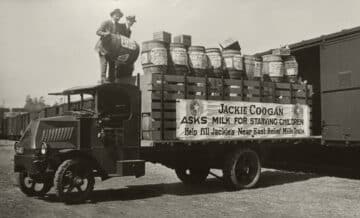
Graber kept this printed pocket diary every day of 1919, from his discharge as a conscientious objector at Fort Riley, Kansas, to his arrival at Antioch on December 30. He sailed from New York on the Pensacola on January 25, heard Dr. Usher lecture on the Armenian massacres on the way out, and landed at Beirut on February 20. For three months he worked on the motor transport. He assembled trucks, hauled soup and flour to the bread lines and wired a new hospital for communicable diseases. On May 23 he set out by car for Aleppo, 255 miles by way of Tripoli, Homs and Hama. At Aleppo he ran the relief industries and in July started a rug-weaving factory. On July 27 he was appointed to succeed Captain Hurd in charge of the Armenian refugee barracks, where 1,200 people had come in the day before. His entries for August and September record the barracks day by day: trials and jail sentences, eight weddings in one day, girls brought out of Arab homes, a newborn found on a doorstep, a threatened rush on the jail, and a visit from General Harbord and his staff. Ill in the autumn, he went to Beirut for treatment in November. In December he sailed to Latakia, sent blankets by camel to Kessab and met its relief committee, then went on to Antioch by way of Alexandretta.
Context
Christian L. Graber (1895–1987), known as Chris, was a Mennonite from Noble, Iowa. A conscientious objector during World War I, he was held at Fort Riley, Kansas, until his discharge in January 1919. On January 25, 1919, he sailed from New York for Beirut on the relief ship Pensacola with the first group of Mennonite volunteers sent to work under the American Committee for Relief in the Near East. He worked in the Beirut transport department until late May, then went to Aleppo, where he ran the relief industries and, from July 1919, the Armenian refugee barracks. At the end of 1919 he was sent to open relief work in the Antioch district. He later spent many years as business manager of Goshen College.
This document is one of three from Graber's papers at the Mennonite Historical Library, Goshen College: his diary for 1919, his diary for January and February 1920, and a letter he wrote from Aleppo in June 1919 for the Wayland News. Together they record the work of a relief mechanic and supply man day by day, from the bread lines of Beirut to the refugee barracks at Aleppo and the villages around Antioch.
-
Holding Institution
Mennonite Historical Library (Goshen College)
-
External Link
-
Attribution
Mennonite Historical Library, Goshen College. Christian L. and Mina Roth Graber Papers (HM1/209).
-
Rights
This material is protected by copyright. Permission has been granted for its non-commercial research and educational display by NERHS. Uses beyond this permission may require permission from the rights holder. Users are responsible for determining rights status and compliance with applicable law. If you believe you hold rights in this material or have information about rights holders not currently reflected, please contact [email protected].
-
Notes
Identification page, in Graber's hand: "My Business Address Noble, Iowa" ... "In case of accident or serious illness please notify Mr. Daniel Graber Noble, Iowa U.S.A" ... "The make of my Automobile NOT MADE"
Diary, February 20, 1919: "Went ashore at 10:30 A.M." March 21: "Made a cement base for our Delco at the Communicable Hospital." May 23: "Left Beirut at 9 A.M." July 27: "Was appointed O.C. Barracks to succeed Capt Hurd." September 12: "General Harbord & staff arrive in Aleppo & visit Bks." December 11: "Arrived Kessab 6:30 P.M. very tired."
About this group: Christian L. and Mina Roth Graber Papers (HM1/209), Mennonite Historical Library, Goshen College.
• Mennonite Archival Information Database, finding aid for the Christian L. and Mina Roth Graber Papers 1840-1973, US GCA HM1/209, biographical history ("C. L. Graber was a pastor, businessman, and longtime business manager at Goshen College."): https://archives.mhsc.ca/index.php/christian-l-and-mina-roth-graber-papers-1840-1973
• Orie O. Miller, "Our Relief Work in the Near East and Russia," in J. S. Hartzler, Mennonites in the World War (1921), p. 196 ("the invitation of the American Committee for opening work in Turkey and for sending over a group of workers, be accepted"), p. 197 ("On January 25, 1919, the first group of nine, sailed from New York on the Relief ship "Pensacola" direct for Beirut, Syria. ... Chris Graber of Noble, Iowa") and p. 204 ("Chris Graber was stationed in Beirut until the latter part of May, working principally in the transport department. He was then transferred to Aleppo ... and then was placed at the head of the Armenian refugee work in that city." ... "he was sent to open work in the Antioch district"), Internet Archive: https://archive.org/details/mennonitesinthew00hartuoft
• Chris L. Graber, diary, January 1, 1919 ("Was at Ft. Riley Kansas. Signed a few discharge papers.") and December 30, 1919 ("left for Antioch at 5 A.M. in a funny carriage"), in this group.
-
Document Contents
Printed pocket diary for 1919, three days to a page, with an identification page, a printed calendar and almanac, and a memoranda page tallying meals taken at Kessab. Graber wrote an entry for every day of the year.
January: discharge at Fort Riley, Kansas (January 1 to 3), home to Iowa, a telegram appointing him "to go to Armenia" (January 9), and travel by Pittsburgh and Philadelphia to New York. The Pensacola sailed on January 25.
January and February, at sea: language study, devotions and lectures, among them Dr. Usher on "Armenian Massacres" (January 29) and Dr. Wirt on "War Tragedies" (February 15). A stop at Gibraltar (February 8). Arrival at Beirut on February 19 and landing on February 20.
February to May, Beirut: work on the motor transport, hauling soup and flour to the bread lines, wiring and fitting out the new communicable-disease hospital with Zimmerman, and trips to Sidon, Tripoli, Haifa and Damascus.
May 23 to 27: the drive to Aleppo by Batroun, Tripoli, Homs and Hama, and a supply run to Aintab.
June and July, Aleppo: the industrial shops and the knitting rooms at the barracks, quartermaster duty from June 12, supplies forwarded to Aintab, Urfa and Marash, and the start of a rug-weaving factory.
July 27 to late September: charge of the Armenian refugee barracks after Captain Hurd, with trials and jail sentences, weddings, twelve girl mothers, girls brought from Arab homes, a threatened rush on the jail (September 4), and General Harbord's visit (September 12). Articles for the Gospel Herald, the Wayland News and the Monitor.
Late September to mid-October: a vacation by Damascus, Haifa and Jerusalem, returning by Tyre, Sidon and Beirut.
October and November: auditing the industrial accounts at Aleppo, illness, treatment in hospital at Beirut, and supply trips to Deir el Kamar and Sidon.
December: by sea to Latakia, blankets sent to Kessab and a meeting of the Kessab relief committee (December 11 to 15), a long wait at Latakia for a boat, and the journey by Alexandretta to Antioch (December 29 to 30).