
Skip to Main Content

A gaunt man staggered out of the mountains and into Erivan in the early spring of 1922. He could barely speak. He pointed back the way he had come, where eighty-six children were rationing their food at thirty-two beans each per day in an abandoned Czarist barracks. One day’s supply remained when Near East Relief reached them.

Near East Relief’s work in Erivan (now Yerevan, Armenia) is often overshadowed by Alexandropol, but Erivan has its own story. This dispatch opens with “32 Beans a Day,” published in the New Near East in July 1922, then turns to the orphanage that relief worker Dorothy H. Sutton built from a ruined house in the same city.
Three ragged children stand beside an oxcart at Karakilisa (Vanadzor), Armenia. The New Near East, April 1922.

“32 BEANS A DAY”

Mr. Wilfred Keller, a former resident of Linden Hall, near State College, PA, discovered that eighty-six children were living on thirty-two beans each per day near Erivan, Armenia. They had taken refuge in the old military barracks of Daranchichak* far up on the mountainside above Erivan.

Various reports had reached the Near East Relief Director at Erivan that there was great suffering in the snowbound mountain villages, owing to the lack of seed for planting, the failure of the few crops, and the difficulty of travel during the winter months. A gaunt man, half dead, had staggered into the city and spread the news. At first, he could hardly speak and only pointed to the mountains.

* Daranchichak (also rendered Darachichak) is now known as Tsaghkadzor, Armenia. The name is a Turkic rendering of the older Armenian “Tsaghkunyats Dzor,” meaning “valley of flowers.”

Near East Relief promotional postcard illustrated by Maxim Seibold, 1922. A starving Armenian mother shields her child as a wolf approaches; the Near East Relief star burns overhead.

Forty ox-carts were quickly loaded with Near East Relief supplies, and Mr. Keller started out through the snow with his caravan on a hunting trip for mountain villages where children were starving.

On the way, he passed the bones of donkeys, camels, and smaller animals which had been killed and eaten by the hungry wolves that were roaming the country. Although it was early spring, the oxen were up to their knees in snow, making travel difficult.

Finally, the old military barracks at Daranchichak came into view. The jingle of the caravan’s bells drew a crowd of gaunt beings from buildings that once housed the army of the Czar. Followed by this shouting, pleading mob, the caravan pushed forward to the barracks where Mr. Keller found the eighty-six starving children lying listlessly in corners.

Orphan children in rags. The New Near East, November 1922. Magazine caption: "Before the cry of the child, all creedal differences are submerged."
Near East Relief worker R.M. Davidson with orphan children at Erivan, Armenia, April 1922.

On the return trip to Erivan, the caravan had a different aspect. Instead of bags of American flour, corn grits, and evaporated milk, the wagons were loaded with ragged children, the sick lying on the wagon floor, and the stronger ones grouped along the sides.

The snow was so deep that the oxen made but slow progress, and the blinding snowstorm made the homeward trip difficult. One wagon was overturned, and Mr. Keller had to fish the children from the snowbanks.

Children making up mattresses in a dormitory at the Erivan (Yerevan) orphanage, Armenia. The New Near East, June 1922.

Recently, the old military barracks at Daranchichak have been turned into an up-to-date American orphanage, and 600 children are growing strong and sturdy on wholesome food and fresh mountain air.

Children exercising with poles at the Near East Relief orphanage at Darachichak (Tsaghkadzor), Armenia, where malnourished children were sent to recover at an altitude of 7,000 feet.

Dorothy Sutton’s Erivan

The children Keller rescued from Daranchichak found a home in a very particular place. Like so many Near East Relief stations, the Erivan orphanage was built from almost nothing.

Dorothy H. Sutton arrived in Constantinople in 1920 as part of the Leviathan relief party. After six months there, she was sent to the Caucasus, where she took charge of Near East Relief’s operation at Erivan. Sutton rescued 400 children from the streets of the city in the early 1920s, but she had nowhere to house them. The local government offered her an abandoned house. It had once been spacious and beautiful, but by 1921, it was in ruins. All of the windows were broken. The floors were littered with shards of glass. Most of the roof had collapsed. There was no furniture.

Sutton and the children went to work. The children installed windows and patched the roof. The boys built tables and chairs. Girls sewed mattress covers and stuffed them with hay. Sutton calculated how many children she could fit in the house.

Then, with a stack of paper tickets, she took to the streets of Erivan.

Near East Relief worker Dorothy H. Sutton with three orphan girls at the Erivan (Yerevan) orphanage, Armenia. The New Near East, November 1922.


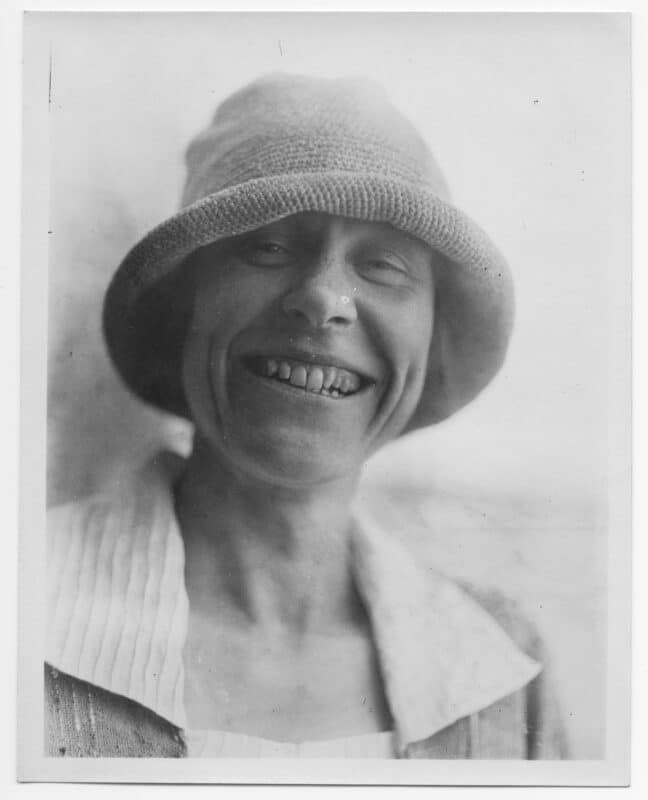
Portrait of Near East Relief worker Dorothy H. Sutton, c. 1922.

Each ticket guaranteed admission for one child to the new orphanage. There were far more orphans than there were beds. Every child on the streets of Erivan was ill and hungry. Sutton could only take in the most hopeless cases. The healthier children would have to wait.

Near East Relief orphanages in Armenia served more than 22,000 children in 1922. Relief workers were forced to leave another 10,000 waiting at the gates. In 1923, the children of the Erivan orphanage were transferred to Alexandropol (now Gyumri) as part of Near East Relief’s consolidation of operations in Soviet Armenia. They became citizens of the Orphan City.

Sutton went on to work for Near East Relief in Ismid (İzmit), and later in Greece, where she served as Director of Child Welfare in Salonica (Thessaloniki). She cared for 300,000 refugees and 50,000 children in camps and orphanages across the region. She received the Greek Order of the Redeemer in Athens in July 1923 and, in 1926, accepted a Near East Relief Distinguished Service Award. Sutton died in 1970. Her personal papers are held at the American School of Classical Studies in Athens.