Dr. Ruth Parmelee, of Baltimore, was among the medical staff who crossed on the "Leviathan." Assigned to Harpoot, she ran a daily clinic for women and children, helped run the orphanage's hundred-child home units, managed the home for girls rescued from Turkish harems, ran the maternity hospital, and fought typhus. Deported by the Kemalists in January 1922, she reached America that May via Aleppo and Constantinople, then returned to the Near East in September to direct medical work at a refugee camp near Salonica. Source: Near East Relief, Team Work, Vol. III, No. 6 (Veterans' Number), 13 June 1924 (FA406 S12 B004 F033).
Context
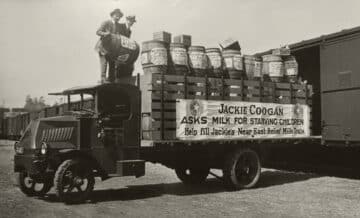
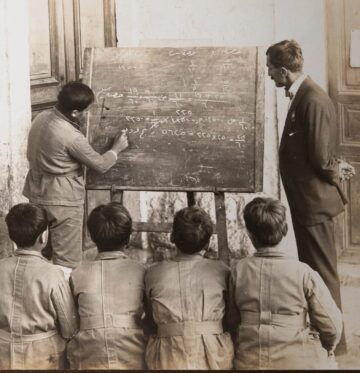
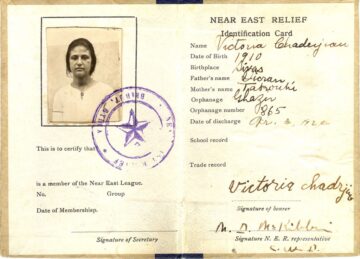
The Barclay Acheson Collection at the Rockefeller Archive Center holds the personal photographic record of Near East Relief's Director of Overseas Operations from 1925 through 1929. Barclay Acheson (1886–1957) joined NER as Associate General Secretary in 1922 and took charge of relief work across Greece, Syria, and the Caucasus the following year. He was based in Athens after the 1922 Smyrna catastrophe and traveled annually to NER's field operations across the Caucasus, Anatolia, Beirut, and Baghdad. The collection's 1,000-plus photographs include formal NER institutional records and personal snapshots from his inspection trips. The subjects span the Alexandropol orphan city, the Athens Zappeion evacuation, the Ghazir vocational school, and the 1927 Iraq survey trip. The photographs are the visual counterpart to Acheson's contemporaneous diaries; the RAC also holds the diaries, and they are available on the NERHS museum site under Voices of NER — Leadership.
No known copyright restrictions. Based on available information, NERHS is not aware of copyright restrictions on this material. Items are presented for non-commercial research and educational use. Users are responsible for determining rights status and compliance with applicable law.