Fiddler ringed by children in the snow, Caucasus, 1920s
Location
Transcaucasia
Year
1920s
Context
Harold C. Jaquith directed Near East Relief's operations from Constantinople (Istanbul) and photographed the organization's work across the post-genocide Near East.
These photographs come from the Caucasus in the years around 1920, when NER ran the orphanage at Alexandropol (Gyumri), then the largest in the world, and fed survivors of the Armenian Genocide through famine winters. The genocide, carried out by the Ottoman government from 1915, had orphaned tens of thousands of children in the Russian borderlands. War, typhus, and crop failure then brought famine across the region.
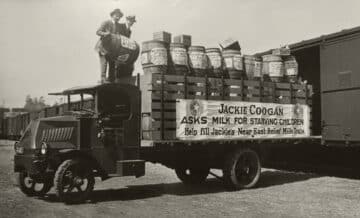
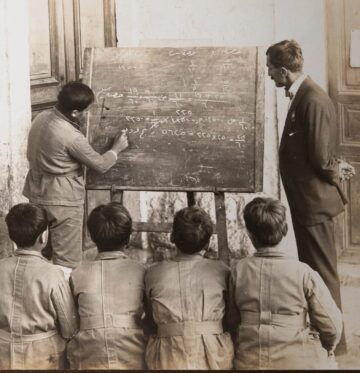
The photographs show the relief work and the people it reached: eye clinics against the orphanage walls, ration lines in the snow, boys in clothing sewn from American flour sacks, and the children.
No known copyright restrictions. Based on available information, NERHS is not aware of copyright restrictions on this material. Items are presented for non-commercial research and educational use. Users are responsible for determining rights status and compliance with applicable law.