Rev. James L. Barton, Chairman of Near East Relief (1915–1930)
Location
United States
Year
1915
Context
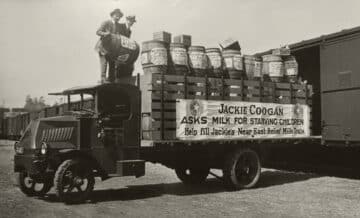
Under James L. Barton's chairmanship, Near East Relief raised collected and administered more than $116 million in cash, commodities, and donated services between 1915 and 1930 — one of the largest civilian fundraising efforts in U.S. history to that point. Barton (1855–1936) brought to the role a quarter-century of direct experience in the region. He and his wife, Flora Holmes Barton, lived in Harput from 1885 to 1894, where he supervised the Turkish missionary school system and served as president of Euphrates College. He returned to Boston as Foreign Secretary of the American Board of Commissioners for Foreign Missions (ABCFM) and was at the September 16, 1915, organizing meeting in New York that founded the relief committee. He was named NER's chairman when Congress chartered it in 1919.
Barton's most consequential decision as a publicist came in 1917: he asked American missionaries leaving Ottoman territory to send him detailed written narratives of what they had seen. These eyewitness accounts — collected, edited, and circulated to journalists, clergy, and donors — were instrumental in raising American consciousness of the genocide and in sustaining giving year after year. In 1930 he published The Story of Near East Relief, still considered the definitive account of the organization's first fifteen years.
Barton played an important leadership role during the transition from Near East Relief to Near East Foundation in 1930. The New York Times called him "a Near East saint" at the time of his death in 1936.
No known copyright restrictions. Based on available information, NERHS is not aware of copyright restrictions on this material. Items are presented for non-commercial research and educational use. Users are responsible for determining rights status and compliance with applicable law.