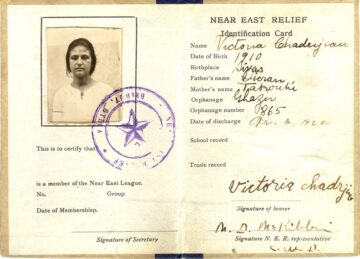
Location

Alexandropol (Gyumri)

Year

1920

Item Detail

Near East Relief handed leadership in the Caucasus from United States Army officers to civilian administrators, part of turning wartime emergency work into a civilian system of orphanages, hospitals, refugee camps, and supply stations. This double issue maps that system and reports official statistics as of June 30, 1920 for orphanages, hospitals, trachoma treatment, refugee assistance, and clothing shipments. Field reports describe a Greek orphanage at Kerassunde, a camp of 700 boys at Aleppo, orphanage work in Sivas, and rescue work at Harpoot.

Context

The New Near East was Near East Relief's monthly publication that reported on the organization’s work and mobilized financial support from American readers. Its articles preserve evidence of field conditions and institutional decisions, but they frame that evidence through Near East Relief’s own appeals for support.

View in the Digital Archive
  • Holding Institution

    Rockefeller Archive Center

  • External Link

  • Attribution

    Near East Foundation Collection, Rockefeller Archive Center

  • Rights

    No known copyright restrictions. Based on available information, NERHS is not aware of copyright restrictions on this material. Items are presented for non-commercial research and educational use. Users are responsible for determining rights status and compliance with applicable law. If you believe you hold rights in this material or have information about rights holders not currently reflected, please contact [email protected].

  • Notes

    Masthead: Vol. V, No. 11 (Total No. 39), July-August 1920. Published by Near East Relief, New York.

  • Document Contents

    * “The Roll-Call” reports on the Near East Relief gathering at Ocean Grove and presents appeals from workers and supporters.

    * “Caucasus” describes the transition from U.S. Army officers to civilian Near East Relief management under E. A. Yarrow.

    * “Near East Relief—What, Where and How” summarizes the organization’s federal charter, geographic divisions, and principal programs.

    * “Kerassunde” describes a Greek orphanage with about 210 children in a public school building.

    * “Trachoma” explains the disease, its treatment, and its prevalence among children in relief institutions.

    * “What the Politicians Say” compiles public statements about Armenia and Near East Relief.

    * “Syria” surveys relief work in the Aleppo district.

    * “The White City,” by Alma C. Guest, recounts the organization of a camp orphanage for 700 boys at Aleppo.

    * “Shadows” presents field reports on insecurity at Marash and the rescue of women at Harpoot.

    * “Orphanage Work at Sivas” inventories boys’, girls’, Armenian, and Turkish orphanages.

    * “The Armenian Red Cross” outlines the organization’s branches and work from Constantinople.

    * “Distribution of Armenians in the United States” presents demographic information collected by the Division of Foreign Born Women.

    * “Map of Near East Relief Center of Operation” shows the organization’s regional stations.

    * “Report of Hellenic Central Relief Institute” describes Greek orphanages established for deported Greek children.

    * “Official Statistics of Near East Relief” reports personnel, orphanages, hospitals, and relief work by region as of June 30, 1920.

    * “The Bedouin” retells a story about an Ottoman judge.

    * “Personnel Who Have Recently Returned from the Near East” lists returning relief workers.

    * “Report on Second Hand Clothing Shipped from New York (March–April–May, 1920)” tabulates garments and other supplies sent overseas.
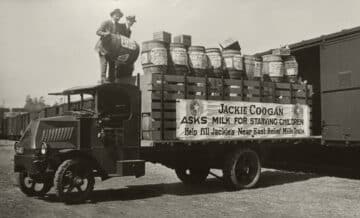
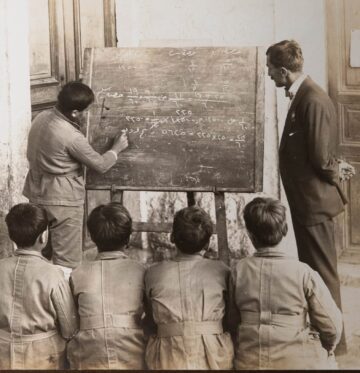
NER maps its stations, orphanages, and hospitals. New Near East, Jul–Aug 1920.