
Collections
Orphan workshops teach trades and manufacture cloth. New Near East, Jun 1920.
Location
Aleppo
Year
1920
Item Detail
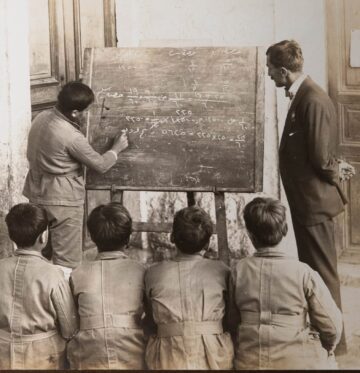
The United States Senate rejected a proposed American mandate for Armenia, and Near East Relief carried on without the political commitment that mandate advocates had wanted. This issue centers on industrial education in its orphanages. More than 9,000 children trained in shoemaking, carpentry, weaving, knitting, sewing, and printing, and the magazine traces cloth from raw fiber through dyeing and finishing. Reports from Urfa, Samsoun, Persia, Armenia, and Beirut cover relief logistics, hospitals, the mandate debate, and services for locating missing families.
Context
The New Near East was Near East Relief's monthly publication that reported on the organization’s work and mobilized financial support from American readers. Its articles preserve evidence of field conditions and institutional decisions, but they frame that evidence through Near East Relief’s own appeals for support.
-
Holding Institution
Rockefeller Archive Center
-
External Link
-
Attribution
Near East Foundation Collection, Rockefeller Archive Center
-
Rights
No known copyright restrictions. Based on available information, NERHS is not aware of copyright restrictions on this material. Items are presented for non-commercial research and educational use. Users are responsible for determining rights status and compliance with applicable law. If you believe you hold rights in this material or have information about rights holders not currently reflected, please contact [email protected].
-
Notes
Masthead: Vol. V, No. 10 (Total No. 38), June 1920. Published by Near East Relief, New York.
-
Document Contents
* “Starting Again at Their Beginnings” reports more than 9,000 children in industrial training and describes shoemaking, carpentry, weaving, knitting, sewing, and printing.
* “In the Clothing Department” and “Process of Cloth Manufacture” trace wool and cotton through cleaning, carding, spinning, weaving, dyeing, and finishing.
* “In Urfa,” by R. A. Lambert, recounts travel from Aleppo during the siege, the French withdrawal, and the interruption and resumption of orphanage work.
* “Stock Company, Samsoun” announces a shoe company whose shares would pass to the Greek orphanage.
* “Persia,” by H. P. Packard, asks for support for relief work at Urumia, Tabriz, Hamadan, and Kirmanshah.
* “Industry in Armenia” discusses cotton, wool, water power, sheep raising, and industrial markets.
* “Brief Bits” reports relief for nearly 10,000 Armenians at Marash and daily production of 5,000 loaves at one bakery.
* “United States Refuses Mandate” records the Senate’s rejection of an Armenian mandate by 52 votes to 23.
* “An American Mother in Armenia to Her Children in America” appeals to American children and reports the transfer of Harouniye Orphanage children to a camp outside Adana.
* “Samsoun Civic Hospital” presents patient totals and reports 29 operations under George T. Pomeroy.
* “The American Red Cross in the Balkans and South Russia” surveys Red Cross relief work.
* “Woodrow Wilson, The White House, 24 May, 1920” asks Congress to authorize an American role in Armenia.
* “The American College at Beirut” describes the institution and the work of Howard S. Bliss.
* “In Memoriam” memorializes J. M. Kennedy, the Montana state director for Near East Relief.
* “Consolidated Monthly Report of Relief Activities—February” tabulates buildings, medical services, orphanages, and rescue homes by district.
* “Personnel Returned” lists relief workers who had returned from the Near East.
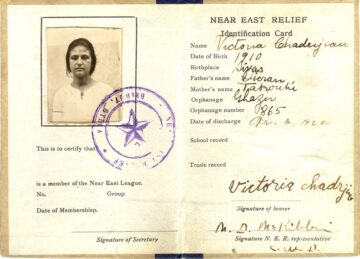
* “Department of Relief and Inquiry” announces the Constantinople office that helped families locate missing relatives.