Location

Samsoun

Year

1921

Item Detail

The First Republic of Armenia had collapsed and renewed warfare had displaced civilians across the Caucasus and Anatolia. Severe winter, damaged transport, and the loss of territory around Kars deepened the need for food, shelter, and medical care. This issue reports more than 3,000 Armenian refugees in five Constantinople camps and severe food shortages in the Caucasus. A stopped flour train, crowded hospitals, and reports from Kars, Samsoun, Sivas, and Derindje show the relief system under pressure. Profiles of Near East Relief speakers and articles on toys, workshops, and clothing drives cover the American campaign.

Context

The New Near East was Near East Relief's monthly publication that reported on the organization’s work and mobilized financial support from American readers. Its articles preserve evidence of field conditions and institutional decisions, but they frame that evidence through Near East Relief’s own appeals for support.

View in the Digital Archive
  • Holding Institution

    Rockefeller Archive Center

  • External Link

  • Attribution

    Near East Foundation Collection, Rockefeller Archive Center

  • Rights

    No known copyright restrictions. Based on available information, NERHS is not aware of copyright restrictions on this material. Items are presented for non-commercial research and educational use. Users are responsible for determining rights status and compliance with applicable law. If you believe you hold rights in this material or have information about rights holders not currently reflected, please contact [email protected].

  • Notes

    Masthead: Vol. VI, No. 4 (Total No. 44), January 1921. Published by Near East Relief, New York.

  • Document Contents

    * “A Reassuring Message” prints James P. Coombs’s cable that Near East Relief stations in the Anatolian interior remained in operation.

    * “Another Turn of the Kaleidoscope” reviews the collapse of the Armenian Republic, territorial losses, and the displacement caused by renewed fighting.

    * “Voices of the Near East Relief” profiles Lady Anne Azgapetian, George B. Hyde, Mesrop Azgapetian, Lincoln L. Wirt, R. S. Emrich, Isaac Yonan, and Elizabeth Kelley as public speakers for the organization.

    * “Armenian Refugee Camps, Constantinople” describes more than 3,000 people living in five crowded camps with inadequate food, clothing, sanitation, and medical care.

    * “Flagging the Flour” prints Ernest A. Yarrow’s account of a desperate crowd stopping a flour train near Alexandropol.

    * “What’s in a Barrel?” uses the contents and cost of a flour barrel to explain the organization’s food appeal.

    * “A Gruesome Bill” records deaths, destruction, and displacement at Marsovan and Sivas.

    * “Anatolia” and “Constantinople” report on field conditions at Samsoun and on the arrival of Russian refugees after the defeat of Baron Wrangel.

    * “The American Public Cares” summarizes campaign receipts and local fundraising for Near East Relief.

    * “The Land Without Toys” describes improvised dolls and play among girls in the Sivas orphanage.

    * “The Eternal Backsheesh” presents George T. Pomeroy’s work at the Near East Relief hospital in Samsoun.

    * “A Novel Engine in Sivas” describes a machine shop where boys and men repaired trucks and operated lathes with a converted motor.

    * “Dressing Up Herminie” and “Rescue Girls Give a Party” describe an American clothing drive and a celebration in a Near East Relief rescue home.
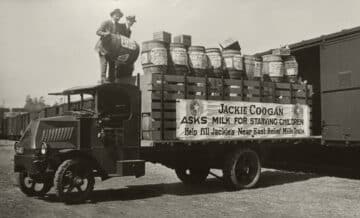
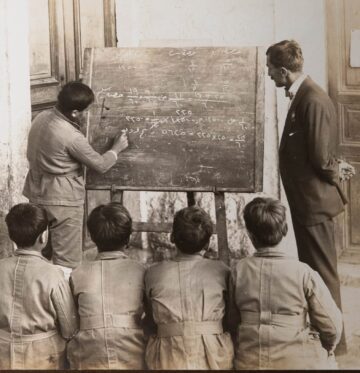
Camps and flour trains expose the winter crisis. New Near East, Jan 1921.