Collections
NER closes Proti and reports from Anatolian doorways. New Near East, Apr 1921.
Location
Constantinople (Istanbul)
Year
1921
Item Detail
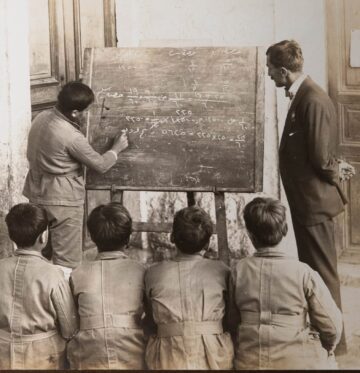
Near East Relief was adjusting facilities it had opened during the postwar refugee emergency. The Proti station for Russian refugees closed while need continued in Constantinople and across Anatolia, where orphanages, hospitals, schools, and workshops served displaced children and adults. Articles from Sivas, Marash, and other centers describe schools, hospitals, orphanage art, scouting, and industrial work. Case histories of Hunazant Kevorkian and Noorilhida record what deportation, forced labor, illness, and hunger did to individual children.
Context
The New Near East was Near East Relief's monthly publication that reported on the organization’s work and mobilized financial support from American readers. Its articles preserve evidence of field conditions and institutional decisions, but they frame that evidence through Near East Relief’s own appeals for support.
-
Holding Institution
Rockefeller Archive Center
-
External Link
-
Attribution
Near East Foundation Collection, Rockefeller Archive Center
-
Rights
No known copyright restrictions. Based on available information, NERHS is not aware of copyright restrictions on this material. Items are presented for non-commercial research and educational use. Users are responsible for determining rights status and compliance with applicable law. If you believe you hold rights in this material or have information about rights holders not currently reflected, please contact [email protected].
-
Notes
Masthead: Vol. VI, No. 7, April 1921. Published by Near East Relief, New York.
-
Document Contents
* “A Message to Our Friends” explains changes in the magazine’s format and asks readers to continue their support.
* “The ‘Leg-Stretching’ Station at Proti” describes the closing of a station that had served Russian refugees near Constantinople.
* “From a Swiss Point of View” prints J. Riedinger’s observations of Armenian and Russian refugees in Constantinople.
* “Help Load Up the Camel!” asks for slates, pencils, and other supplies for Near East Relief schools at Marash.
* “From Near East Doorways” describes children arriving at the Sivas hospital and orphanage.
* “Art in the Orphanage” and “Scouts in the Near East” report on decoration, recreation, and scouting in relief institutions.
* “I Have a Little Child,” by E. A. Watson Hyde, presents child sponsorship as a means of supplying food and care.
* “An Orphan on Orphans” prints H. M. Hadidian’s account of orphanhood and relief.
* “The Jumble in Constantinople” describes encounters with impoverished refugees in the city.
* “The Tired Little Hamal,” by Melville Chater, recounts Hunazant Kevorkian’s deportation and forced labor.
* “‘Tom Sawyer’ in the Near East” tells how orphanage boys raised money for a hungry child living in a cave.
* “Only One of Thousands” profiles Noorilhida, whose photograph inspired an American clothing drive.
* “‘Heal All’ of Sorrow” describes Near East Relief workrooms and the Constantinople Gift Shop.