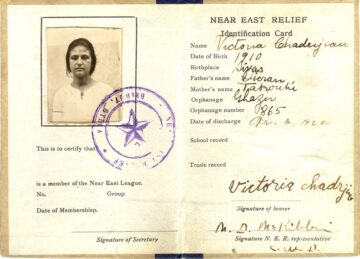
Location

Aleppo

Year

1921

Item Detail

Near East Relief was working out the long-term purpose and the limits of its orphanage system. Food shortages and displacement still required emergency aid, but workers also pressed for education, vocational training, and psychological recovery. This issue sets out the revised orphanage policy and surveys food, clothing, and supply work across the region. Articles follow Mina's recovery at Aleppo, raids in northern Palestine, workshop production, and the psychological care of Armenian children. Shipping reports and a station list document the network from Constantinople and the Caucasus to Syria, Palestine, Persia, and Mesopotamia.

Context

The New Near East was Near East Relief's monthly publication that reported on the organization’s work and mobilized financial support from American readers. Its articles preserve evidence of field conditions and institutional decisions, but they frame that evidence through Near East Relief’s own appeals for support.

View in the Digital Archive
  • Holding Institution

    Rockefeller Archive Center

  • External Link

  • Attribution

    Near East Foundation Collection, Rockefeller Archive Center

  • Rights

    No known copyright restrictions. Based on available information, NERHS is not aware of copyright restrictions on this material. Items are presented for non-commercial research and educational use. Users are responsible for determining rights status and compliance with applicable law. If you believe you hold rights in this material or have information about rights holders not currently reflected, please contact [email protected].

  • Document Contents

    * “Windows Opening on Hope” profiles Mina, a child rescued from the streets and cared for at the Aleppo orphanage.

    * “The Future of the Orphans” outlines Near East Relief policy for orphanage supervision, property, education, and the transfer of children.

    * “I Live With the World” prints Josephine Huse’s report on raids, displacement, and intercommunal protection in northern Palestine.

    * “The Flour Barrel of the Near East” summarizes bread production and food distribution.

    * “Gifts of Labor and Love” records institutional and public support for Near East Relief.

    * “Miracles in Tin” describes the reuse of cans and other scrap material in orphanage workshops.

    * “Young Armenia Trying to Support Itself” uses photographs to show children and adolescents at work.

    * “Awakening Sleeping Minds,” by Mary Lena Wilson, explains efforts to help children recover from trauma and resume learning.

    * “Blue Beads and American Luck” recounts Melville Chater’s observations of protective charms and improvised symbols.

    * “Aboard the Esther Dollar” follows a food shipment to Constantinople.

    * “Cabled” prints field requests for food, clothing, and medical supplies.

    * “The First Lady of the Land Pleads for Armenia” prints Florence Kling Harding’s appeal for food and clothing.

    * “The Hearts of Little Children” discusses the physical effects of fear and prolonged stress on children.
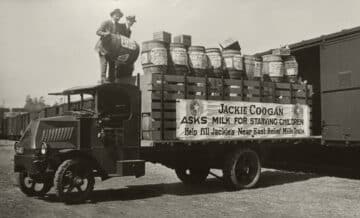
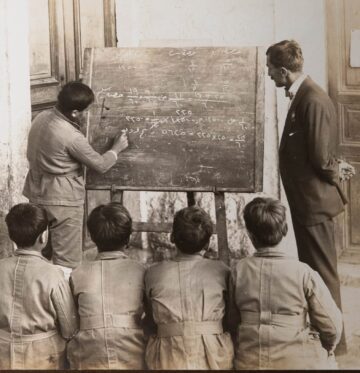
Flour shipments and clothing drives answer summer need. New Near East, Jul 1921.