Men who will help distribute food and supplies in the Near East
Year
1918–1919
Item Detail
American War Relief Activities
L to R: J.E. Todd, W.E. Civit, Dr Henry H. Riggs, T.C. Linn, E.E. Hadley.
Context
These photographs come from the American Unofficial Collection of World War I Photographs (165-WW) within Record Group 165, Records of the War Department General and Special Staffs, held by the U.S. National Archives. The United States government assembled the collection during and just after the First World War from many sources, among them the publicity work of the American Committee for Relief in the Near East (ACRNE), the relief organization that Congress incorporated as Near East Relief in 1919. The Near East images date from 1918 and 1919, as American relief in the region moved from wartime emergency to organized operation.
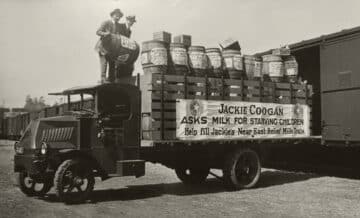
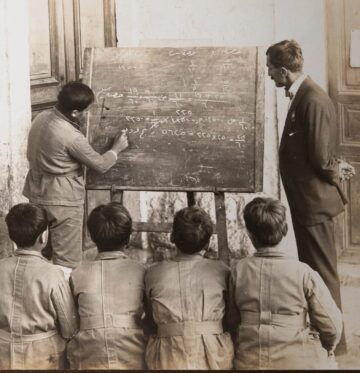
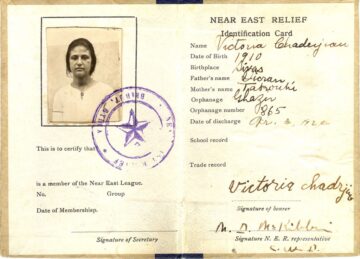
The selection documents two sides of that effort. In the field, it records relief stations, hospitals, and orphan care among Armenian, Assyrian, and Greek survivors of genocide and displacement across the Caucasus, eastern Anatolia, and northwest Persia. At home, it records the American mobilization that paid for the work: fundraising drives, relief ships loading at New York and Hoboken, and the volunteers who sailed to distribute food and supplies.
This group documents the American home front of Near East relief. It records the fundraising drives that financed the work and the relief ships — the Mercurius, the USS Pensacola, the Mauretania — loading food, supplies, and motor trucks at New York and Hoboken for the voyage to the Near East. Among the figures shown are the relief workers who sailed to distribute aid and prominent supporters of the campaign. The images date from 1918–1919, the first years of the mass American philanthropy that sustained the effort.
American Unofficial Collection of World War I Photographs (165-WW), Records of the War Department General and Special Staffs (Record Group 165), U.S. National Archives and Records Administration
Captions in this collection are reproduced from the original 1918 War Department records held by the U.S. National Archives. Period language has been preserved.