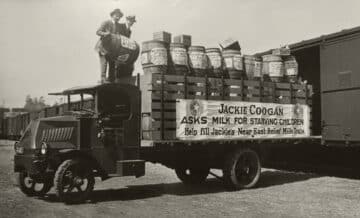
A modest fundraising campaign became a nationwide movement uniting presidents, celebrities, and schoolchildren around a common cause.
A living memorial to the more than 1,000 Americans and international colleagues who served, 1915–1930.
First-person accounts from relief workers and survivors
In-depth stories from the orphanages, relief workers, and campaigns of Near East Relief

Browse archival collections from NER relief workers and orphanages across Armenia, Greece, Lebanon, Syria, and Turkey.
Follow Armenian orphans from Anatolia to NER orphanages around Beirut.
Follow NER’s overseas operations through Barclay Acheson’s photographs, 1922–1928.
Read NER’s field reports, photographs, and appeals in its periodicals.

Trace a family story, teach this history, or conduct original research. Start here to find the right path into the archive.
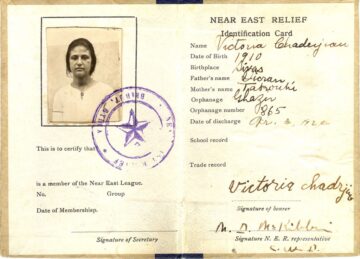
Search by orphanage location and contribute family documents
Primary sources, research tools, and archival guides for students and scholars
Curriculum guide, documentary, and panel exhibit for the classroom
Find Near East Relief archives worldwide
Location
Year
Context
A. Gertrude Anthony (1873–1967), niece of the suffragist Susan B. Anthony, joined Near East Relief in 1919 and spent that year in the Caucasus, where the Armenian Genocide and the collapse of the Russian front had left tens of thousands of children orphaned and destitute. She traveled the relief routes around Karaklis (Vanadzor) and Etchmiadzin before taking charge of the boys' orphanage at Marsovan in 1921. These photographs come from that first year of service: relief workers in their ACRNE uniforms and service stars, covered carts halted on the mountain roads, and children gathered by the hundreds on the open hillsides where the relief teams reached them.
University of California (Bancroft Library)
Courtesy of The Bancroft Library, University of California, Berkeley. Gertrude Anthony photographs (BANC PIC 1986.006).
Digital surrogate courtesy of The Bancroft Library, University of California, Berkeley (Gertrude Anthony photographs, BANC PIC 1986.006). Some materials may be protected by U.S. copyright law. This material is presented in view-only mode for non-commercial research and educational use under fair use. Uses beyond fair use may require permission from the copyright owner. Responsibility for determining rights status and compliance rests with the user. Please write to [email protected] if you have any information about rights holders that we are not aware of.
A white-ink inscription along the left negative edge reads "May 28, 1919 / Karakilisse." Karakilisse (also Karaklis, Karakilisa) is the historical Turkish/Russian name for present-day Vanadzor, in the Lori region of northern Armenia; the mountainous landscape matches the deep, rocky river valleys around the city. The date is the first anniversary of the May 28, 1918 declaration of the First Republic of Armenia, which followed the Armenian victory at the Battle of Karakilisse (25–28 May 1918) against Ottoman forces. The assembly is most likely a commemorative gathering. From Gertrude Anthony's Caucasus posting (1919–1921), her first weeks in the field.