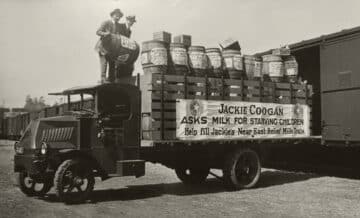
A modest fundraising campaign became a nationwide movement uniting presidents, celebrities, and schoolchildren around a common cause.
A living memorial to the more than 1,000 Americans and international colleagues who served, 1915–1930.
First-person accounts from relief workers and survivors
In-depth stories from the orphanages, relief workers, and campaigns of Near East Relief

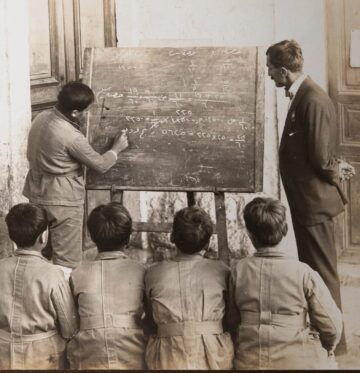
Browse archival collections from NER relief workers and orphanages across Armenia, Greece, Lebanon, Syria, and Turkey.
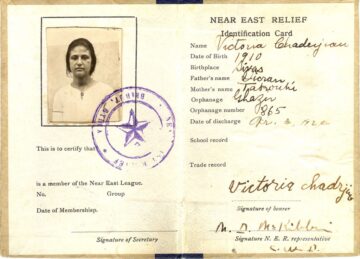
Follow Armenian orphans from Anatolia to NER orphanages around Beirut.
Follow NER’s overseas operations through Barclay Acheson’s photographs, 1922–1928.
Read NER’s field reports, photographs, and appeals in its periodicals.

Trace a family story, teach this history, or conduct original research. Start here to find the right path into the archive.
Search by orphanage location and contribute family documents
Primary sources, research tools, and archival guides for students and scholars
Curriculum guide, documentary, and panel exhibit for the classroom
Find Near East Relief archives worldwide
Location
Year
Item Detail
Supplementary statement on Greek deportations via the Sivas–Erzingan route and estimated 100,000 total deportees, by Dr. Mark H. Ward, May 5, 1922
Context
Dr. Mark H. Ward prepared this supplementary statement, dated May 5, 1922, to accompany the Yowell Report submitted to Secretary of State Hughes. Where Ward’s published Deportations in Asia Minor documented the convoys, he personally observed passing through Kharput, this supplement addresses the deportation routes he could not directly witness — particularly the Sivas–Erzingan road, where Americans were barred from observing or assisting deportees. Ward estimated that approximately 20,000 additional Greeks were sent in that direction from Sivas, with a death toll of roughly 50 percent, and that over 10,000 refugees had survived the winter around Erzerum (Erzurum) in desperate condition.
The supplement also documents a separate deportation of 600 Armenians from the Zeitoun villages through Marash (Maraş) to Chermoug and Severek in November 1921. Ward’s conservative estimate placed the total number of Greeks deported toward Erzerum and Bitlis at approximately 100,000 out of a Greek population of nearly 300,000 under Angora government control and called for Christians to be permitted to leave the country. NARA page stamps 0269–0272.
US National Archives and Records Administration
Turkey/Social Matters/Race Problems/867.4016; National Archives Microfilm Publication M353, Records of the Department of State Relating to Internal Affairs of Turkey, U.S. National Archives and Records Administration
No known copyright restrictions. Based on available information, NERHS is not aware of copyright restrictions on this material. Items are presented for non-commercial research and educational use. Users are responsible for determining rights status and compliance with applicable law.
Described in Division of Near Eastern Affairs cover memo as a supplement to the Yowell report of May 2, 1922. NARA page stamps 0269–0272. Ward estimates approximately 20,000 additional Greek deportees sent via the Sivas–Erzingan road; estimates total Greek deportees at approximately 100,000 out of a Greek population of nearly 300,000 under Angora government control; reports over 10,000 refugees surviving around Erzerum; documents separate deportation of 600 Armenians from Zeitoun villages. Classification canceled January 8, 1958.