Location

Constantinople (Istanbul), Turkey

Year

1922

Item Detail

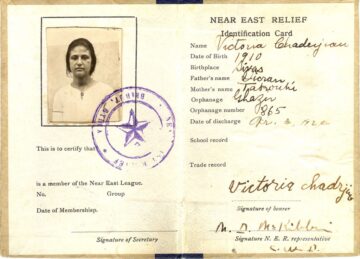
Describes her return to the Near East (a thirteen-day passage from New York), the destruction of Smyrna by the Kemalist forces, and the arrival in Constantinople of 1,500 orphans from Harpoot escorted by six Near East Relief nurses — their journey by wagon, rail, and a coal steamer via Beirut. She awaits a relief assignment, possibly at Athens or Salonica.

Context

Dr. Ruth A. Parmelee (1885–1973) was born at Trebizond to American Board missionary parents and trained as a physician at the Woman's Medical College of Pennsylvania (1912). She practiced medicine at Harpoot from 1914 and witnessed the Armenian Genocide at first hand. In February 1919, she returned to the Near East with Near East Relief as an American Women's Hospitals physician and directed medical work at the Annie Tracy Riggs Memorial Hospital at Mezreh / Harpoot through her expulsion by Turkish Nationalist authorities in early 1922. After a short interval in Constantinople and a brief U.S. furlough, she took up relief work at Salonica in October 1922 — first as medical director of Camp Lembet, a Near East Relief refugee camp serving survivors of the Smyrna catastrophe, and from January 1923 as director of the American Women's Hospitals maternity hospital in Salonica, where she remained through the Asia Minor refugee emergency.

The letters presented here are selected from the Ruth A. Parmelee papers at the Hoover Institution Library & Archives (Box 1, Folders 2–3). They cover her Near East Relief years and the Salonica transition — the Constantinople staging of the relief unit, the Harpoot/Mezreh clinical and orphan-care work, the 1922 expulsion and exile, the Camp Lembet refugee emergency, and the first year of the AWH maternity hospital (1919–1923). They form the documentary counterpart to the Parmelee photograph selection and are organized below by the same phases of service.

View in the Digital Archive
  • Holding Institution

    Hoover Institution Library and Archives

  • Attribution

    Ruth A. Parmelee papers, Box 1, Folder 2, Hoover Institution Library & Archives

  • Rights

    Some materials may be protected by U.S. copyright law. Materials are presented for non-commercial research and educational use under fair use. Uses beyond fair use may require permission from the copyright owner. Responsibility for rights determination and compliance rests with the user. If you believe you hold rights in this material or have information about rights holders not currently reflected, please contact [email protected].

  • Notes

    Parmelee's NER-embedded years. The 1919 letters from Constantinople, Derinjé, and Sivas document the staging of the joint American Women's Hospitals / Near East Relief unit and the long overland push to Harpoot. From October 1919 the correspondence settles into the rhythm of the Mezreh/Harpoot station — the Annie Tracy Riggs Memorial Hospital, the nurses' training school, the orphan and feeding work for the four-thousand-plus children in NER's Harpoot orphanages, rescue cases and adoptions, and the visible changes in patients and orphans across successive seasons. The 1921 letters add the unit's internal upheavals — directorship turnover, Parmelee's own three-week summons to Sivas — and the typhus crisis of late 1921. The series closes with the 1922 expulsion: the journey out aboard the S.S. Pierre Loti via Diarbekir, Beirut, and the Holy Land, a few weeks of exile at the Constantinople Language School, and the September 1922 letter from the Bible House on the Smyrna catastrophe and the arrival of 1,500 Harpoot orphans in Constantinople under NER nurse escort.
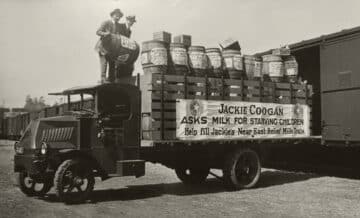
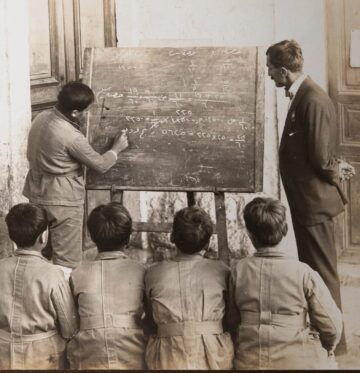
Ruth Parmelee, The burning of Smyrna and the Harpoot orphans, Constantinople, September 1922