A modest fundraising campaign became a nationwide movement uniting presidents, celebrities, and schoolchildren around a common cause.
A living memorial to the more than 1,000 Americans and international colleagues who served, 1915–1930.
First-person accounts from relief workers and survivors
In-depth stories from the orphanages, relief workers, and campaigns of Near East Relief

Browse archival collections from NER relief workers and orphanages across Armenia, Greece, Lebanon, Syria, and Turkey.
Follow Armenian orphans from Anatolia to NER orphanages around Beirut.
Follow NER’s overseas operations through Barclay Acheson’s photographs, 1922–1928.
Read NER’s field reports, photographs, and appeals in its periodicals.

Trace a family story, teach this history, or conduct original research. Start here to find the right path into the archive.
Search by orphanage location and contribute family documents
Primary sources, research tools, and archival guides for students and scholars
Curriculum guide, documentary, and panel exhibit for the classroom
Find Near East Relief archives worldwide
Location
Year
Item Detail
Mersine (Mersin), December 1921: Hovhannes Kouyoumdjian shepherded 79 orphaned Armenian boys onto the last free steamer to Syria, past French sentries and on to a new Near East Relief orphanage at Antilyas (Antelias).
Context
Hovhannes Kouyoumdjian, an Armenian relief worker with Near East Relief, wrote this two-page account at Antilyas (Antelias, Lebanon) in 1922. He had accompanied 79 orphaned boys evacuated from Tarsus through the port of Mersine (Mersin) in late December 1921, when the French withdrawal from Cilicia drove the region's Armenian survivors of the Armenian Genocide onto the last free steamers to Syria.
Kouyoumdjian recounts mixing the boys in with another group of orphans to pass the French military guards, the overcrowded voyage shared with 1,600 other refugees, and the children's prayer in Beirut harbor on the night of December 29. He set down their own words about facing a future without parents and a home. Typed in his own English, the document preserves an Armenian voice from inside the relief effort and the boys' account of their own evacuation.
Rockefeller Archive Center
Nellie Miller Mann Series (Series 14), Near East Foundation Records (FA406), Rockefeller Archive Center. Courtesy of David Mann.
Some materials may be protected by U.S. copyright law. Materials are presented for non-commercial research and educational use under fair use. Uses beyond fair use may require permission from the copyright owner. Responsibility for rights determination and compliance rests with the user.
Signed "Hovhannes Kouyoumdjian," dated "Antilyas, 7-3-22" (ambiguous — March 7 or July 3, 1922). Opens by referencing an earlier account of the same 79 orphans written by NER worker Byron Noone. Names the NER staff who arranged the boarding at Mersine: Byron Noone, Miss Webb, and Mr. Khamkian. On arrival, Mr. McAfee, Managing Director of the NER Committee for the Syria and Aleppo District, placed the boys in a new orphanage.
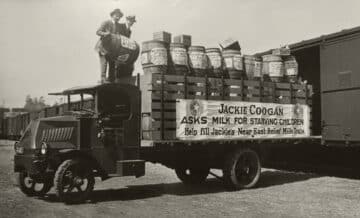
Kouyoumdjian recounts the despair of orphans separated from foster families, his negotiation with the captain to feed an additional 1,600 refugees crowded onto the steamer, and the orphans’ nighttime conversation in Beirut harbor on December 29 about whether NER would still care for them after they landed.