Location

Marash (Kahramanmaras), Lebanon

Year

1922

Context

Nellie Marie Miller Mann (1897–1997) was a Mennonite volunteer from Elkhart, Indiana, who served as secretary to the treasurer of Near East Relief headquarters in Beirut from 1921 to 1923.

A graduate of Goshen College and member of Prairie Street Mennonite Church, she was one of only two Mennonite women to serve in the Near East through the Mennonite Relief Commission during this period. From her desk in the Beirut office, Mann processed correspondence and financial records while the organization managed the evacuation of tens of thousands of Armenian orphans from Cilicia into Syria. She witnessed the Smyrna disaster refugee crisis of 1922 and the murder of NER worker Lester James Wright by bandits near Aleppo.

The collection includes personal and official correspondence, NER administrative reports, field accounts of relief operations in Syria and Cilicia, and documents related to the deaths of NER workers Lester James Wright and Menno Shellenberger. Mann’s letters to her family and fiancé Cleo Mann provide a rare firsthand account of daily life at NER headquarters during one of the organization’s most intense operational periods.

View in the Digital Archive
  • Holding Institution

    Rockefeller Archive Center

  • External Link

  • Attribution

    Nellie Miller Mann Series (Series 14), Near East Foundation Records (FA406), Rockefeller Archive Center. Courtesy of David Mann.

  • Rights

    Some materials may be protected by U.S. copyright law. Materials are presented for non-commercial research and educational use under fair use. Uses beyond fair use may require permission from the copyright owner. Responsibility for rights determination and compliance rests with the user.

  • Notes

    David W. Mann published his mother’s writings in Letters from Syria, 1921–1923 (2013) and donated the original materials to the Near East Foundation.

  • Document Contents

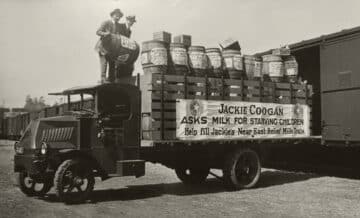
    Article in The New Near East (November 1922) describing the wholesale evacuation of orphans from interior Asia Minor and Cilicia stations — Harpoot, Marash, Urfa, Adana, Aintab, Diarbekir, Arabkir, and Mardin — as NER work was curtailed for diplomatic and economic reasons. Howard McAfee, managing director of the Beirut area, directed long and dangerous overland convoys of more than 5,000 children south to Aleppo for redistribution to Ghazir, Sidon, Jebail, Constantinople, and Greece. Notable episodes include 100 blind children from the American School for the Blind in Harpoot making the 500-mile journey to Aleppo through bandit-infested mountains and on Euphrates barges, a final group of twenty girls (the last of 3,000 evacuated from Marash, Urfa, Diarbekir, and Mardin) whose American truck driver was briefly imprisoned by Turkish officials, and Greek children gathered up exhausted from deportee lines through Sivas and carried 750 miles to Beirut by rough Turkish roads and freight cars. The piece names the famous brigand chief Sherif Agda, who agreed to escort one orphan caravan with thirty of his best horsemen “armed to the teeth.”