Collections
Golden Rule Sunday supports orphan care. New Near East, Dec 1923.
Location
Oropos
Year
1923
Item Detail
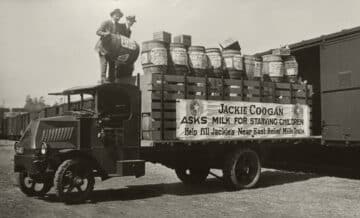
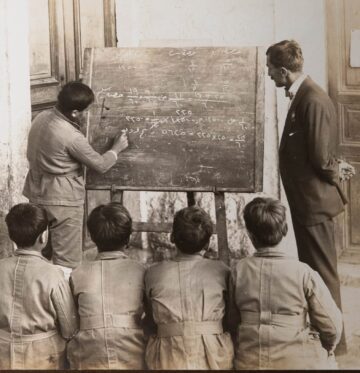
Golden Rule Sunday was presented as a moral and financial pledge to children displaced by war and genocide. Near East Relief paired the campaign with reports from its orphanages and a tour of institutions from the Caucasus to Greece. This issue carries sermons, speeches, photographs, and field reports describing more than 51,000 children in institutions and the work of the Birds' Nest at Sidon. The fundraising language turned a dispersed network of schools, workshops, and homes into a single public cause.
Context
The New Near East was Near East Relief's monthly publication that reported on the organization’s work and mobilized financial support from American readers. Its articles preserve evidence of field conditions and institutional decisions, but they frame that evidence through Near East Relief’s own appeals for support.
-
Holding Institution
Rockefeller Archive Center
-
External Link
-
Attribution
Near East Foundation Collection, Rockefeller Archive Center
-
Rights
No known copyright restrictions. Based on available information, NERHS is not aware of copyright restrictions on this material. Items are presented for non-commercial research and educational use. Users are responsible for determining rights status and compliance with applicable law. If you believe you hold rights in this material or have information about rights holders not currently reflected, please contact [email protected].
-
Notes
Masthead: Vol. VIII, No. XII, December 1923. Published by Near East Relief, New York.
-
Document Contents
* “Children and the New World,” by W. Edward Raffety, describes Sunday School cooperation with Near East Relief.
* “America and the Golden Rule” prints Samuel McCrea Cavert’s 22 October address on humanitarian work and peace.
* “A Red Letter Day,” by W. G. Landes, asks families to observe Golden Rule Sunday.
* “Communion of the Golden Rule,” by Henry Van Dyke, reports more than 51,000 children in orphanages, about 50,000 more in need, and a hypothetical meal table more than 15 miles long.
* “Machine Age Humanitarianism” interprets American organization, transport, and institutional relief as a new force in the Near East.
* “Symbolizing Parenthood” describes a flag made at Oropos and presented to Charles H. Emmons.
* “The Birds’ Nest,” by W. G. Clippinger, visits Marie B. Jacobsen’s institution at Sidon, calls its residents 407 children, and captions Nellie M. Miller with Takouhi, Anna, and Ibrahim and a second photograph of Asadouhi.
* “To An Honorable Conclusion” prints William H. King’s 22 October speech and follows a tour from Mount Ararat through Jerusalem, Nazareth, Sidon, Jebail, Kavalla, and Corinth, where Emma Cushman directed children.