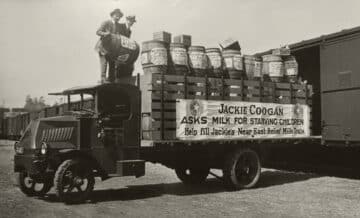
A modest fundraising campaign became a nationwide movement uniting presidents, celebrities, and schoolchildren around a common cause.
A living memorial to the more than 1,000 Americans and international colleagues who served, 1915–1930.
First-person accounts from relief workers and survivors
In-depth stories from the orphanages, relief workers, and campaigns of Near East Relief

Browse archival collections from NER relief workers and orphanages across Armenia, Greece, Lebanon, Syria, and Turkey.
Follow Armenian orphans from Anatolia to NER orphanages around Beirut.
Follow NER’s overseas operations through Barclay Acheson’s photographs, 1922–1928.
Read NER’s field reports, photographs, and appeals in its periodicals.

Trace a family story, teach this history, or conduct original research. Start here to find the right path into the archive.
Search by orphanage location and contribute family documents
Primary sources, research tools, and archival guides for students and scholars
Curriculum guide, documentary, and panel exhibit for the classroom
Find Near East Relief archives worldwide
Year
Item Detail
Constantinople (Istanbul), July 16, 1915: In his most direct warning, Morgenthau cabled that “a campaign of race extermination is in progress” against the Armenians and that nothing short of force could stop it, urging Washington to alert the belligerent nations and mission boards.
Context
On July 16, 1915, Morgenthau sent Lansing his most direct assessment of the Armenian Genocide. Asking whether Washington had received his cable 841, he reported that the deportation of and excesses against peaceful Armenians were increasing, and that from “harrowing reports of eye witnesses it appears that a campaign of race extermination is in progress under a pretext of reprisal against rebellion.” Protests and threats had proved unavailing and only drove the Ottoman government to harsher measures. Morgenthau concluded that nothing short of force, which the United States could not exert, would meet the situation, and urged Lansing to inform the belligerent nations and the American mission boards. The phrase “race extermination” places this among the earliest official American descriptions of the genocide as deliberate and total.
US National Archives and Records Administration
No known copyright restrictions. Based on available information, NERHS is not aware of copyright restrictions on this material. Items are presented for non-commercial research and educational use. Users are responsible for determining rights status and compliance with applicable law.
Telegram 858, July 16, 1915, 1 p.m.; received July 20. “Confidential” notation struck through. Green Cipher; references cable 841. Signed “American Ambassador, Constantinople.” NARA, RG 59, 867.4016/78; microfilm M353, roll 43, frame 0724. Classification canceled Jan. 8, 1958.