A modest fundraising campaign became a nationwide movement uniting presidents, celebrities, and schoolchildren around a common cause.
A living memorial to the more than 1,000 Americans and international colleagues who served, 1915–1930.
First-person accounts from relief workers and survivors
In-depth stories from the orphanages, relief workers, and campaigns of Near East Relief

Browse archival collections from NER relief workers and orphanages across Armenia, Greece, Lebanon, Syria, and Turkey.
Follow Armenian orphans from Anatolia to NER orphanages around Beirut.
Follow NER’s overseas operations through Barclay Acheson’s photographs, 1922–1928.
Read NER’s field reports, photographs, and appeals in its periodicals.

Trace a family story, teach this history, or conduct original research. Start here to find the right path into the archive.
Search by orphanage location and contribute family documents
Primary sources, research tools, and archival guides for students and scholars
Curriculum guide, documentary, and panel exhibit for the classroom
Find Near East Relief archives worldwide
Location
Year
Context
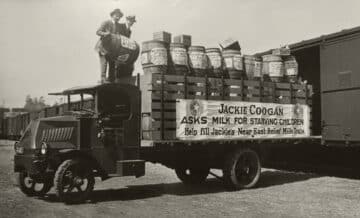
In 1921, a group of Americans associated with the Near East Relief (NER), an organization established to save the survivors of the Armenian Genocide, launched the Lenten Sacrifice Committee. The committee members were prompted by the desperate situation of more than 110,000 Armenian orphans whose lives were completely dependent on American aid. The committee was headed by Major-General Leonard Wood, the chief of staff of the United States Army and at one time military governor of Cuba. Wood declared that “Americans will not willingly allow a child to starve; they only need to be shown how to save lives and the means are forthcoming.”
In order to reach their objective, the committee pioneered a philanthropic technique in the form of a coupon booklet designed by the secretary of the Pennsylvanian NER committee, George E. Silloway. The booklet, titled “The Life of a Child,” begged the question, “What is Your Verdict … 115,000 little children await the verdict of America as to whether they shall have life or death.” The booklet contained 60 $1 removable coupons with 60 unique pictures of the Armenian Genocide printed on one side. It was stated that each coupon purchased would prolong the life of a child for one week, that 5 coupons would give life to a child for a month, and 60 coupons would give life to a child for a year.
- Excerpted from V. Babkenian, "America’s Chosen Executives Help Save Lives of Armenian Children," Armenian Weekly, Aug. 3, 2011.
Vicken Babkenian Personal Collection
No known copyright restrictions. Based on available information, NERHS is not aware of copyright restrictions on this material. Items are presented for non-commercial research and educational use. Users are responsible for determining rights status and compliance with applicable law.