
Collections
American Relief Administration Photographs (1919–1921)
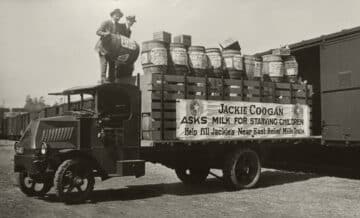
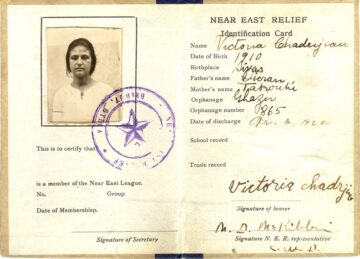
In 1919 and 1920, two American organizations ran a single relief program in the Caucasus. The American Relief Administration (ARA) was created in February 1919 to spend a $100 million congressional appropriation for relief in Europe, and Herbert Hoover was its director general. As that appropriation ran out, Hoover re-formed the ARA in July 1919 as a volunteer, non-profit successor under the same name. Near East Relief (NER) received its charter from Congress on August 6, 1919. Under its earlier names it had sent aid since 1915 to Armenians who had fled eastern Turkey into the Russian Caucasus during the Armenian Genocide. Howard Heinz, Hoover’s representative in the Near East, toured the region in May 1919. He reported 500,000 refugees in need of food, and 200,000 to 250,000 of them at the point of starvation.
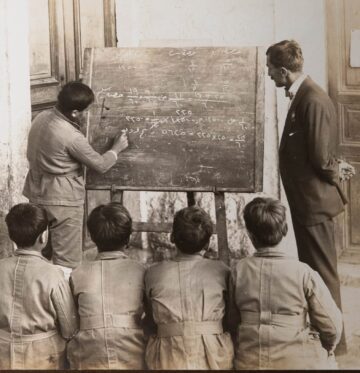
NER’s Alexander Hemphill and Henry Morgenthau then negotiated a joint program with Hoover. On July 5, 1919, the Allied powers at the Paris Peace Conference appointed Colonel William N. Haskell of the U.S. Army as High Commissioner to Armenia for the United States, Britain, France and Italy. Haskell also represented the ARA and served as joint relief administrator. The division of labor was explicit. The ARA supplied food: more than 50,000 tons from the congressional appropriation, for which the Armenian government gave its notes. Under an act of Congress of March 1920, the U.S. Grain Corporation added 40,000 tons of flour. NER agreed to pay the administrative, orphanage and transportation costs, estimated at $500,000 a month. Its workers took their assignments from Haskell and were responsible for the children and the orphanages. The commitment strained NER. Late in 1919, it appropriated $1.5 million to aid Haskell, which, with its other spending, temporarily overdrew its treasury. By Hoover’s accounting, the program opened or restored 40 hospitals and 17 orphanages and fed more than 50,000 children a day. Accounts of NER’s share differ. Barton credits it with $11.2 million of $28.8 million in all relief to Armenia and the Caucasus from January 1919 to July 1920, while Hoover lists $4.8 million in NER donations within a $21.0 million government program.
The joint period ended in the summer of 1920. Bolshevik forces had entered the Caucasus. Haskell and many of his staff were U.S. Army officers, and to avoid international complications he and his military aides withdrew to Constantinople. On July 26, Hoover reported that the orphanages, hospitals and other charities in the Armenian Republic and Transcaucasia had been turned over to NER’s management. Haskell’s resignation was to take effect on August 1. Ernest A. Yarrow took charge of the civilian relief workers who remained. After Armenia became a Soviet republic that December, NER kept the work going, and in 1922 it signed an agreement with the new government.
This collection holds 67 prints from the ARA European operational records at the Hoover Institution Library & Archives. Most came to the ARA from Near East Relief, and a photograph’s place in the ARA’s files does not show that the ARA made it or ran what it shows.
Sources and provenance: The originals, with their inscriptions and album captions, are in the American Relief Administration European operational records (Boxes 851, 855 and 858), Hoover Institution Library & Archives, Stanford University. The founding and re-formation of the ARA come from Hoover’s collection guide, which quotes Herbert Hoover’s An American Epic, vol. III. The joint program’s terms, costs and totals, the Heinz report, the withdrawal, NER’s charter and the 1922 agreement come from James L. Barton, Story of Near East Relief (1930). Haskell’s appointment, the program’s accounts, the handover and NER’s appropriation come from two letters to the Secretary of State in Papers Relating to the Foreign Relations of the United States: NER’s Executive Committee’s of November 1919 and Hoover’s of July 26, 1920. Further sources are cited in the individual photograph records.