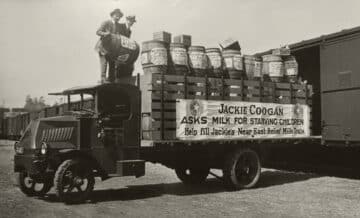

In the early 1920s, Syracuse grocers might invite a customer paying for groceries to drop a measure of flour — or a silver dollar — into a barrel beside the counter. The donation would travel by railcar to the Black Sea port of Batum, then onward to Near East Relief orphanages and feeding stations. Within months, “Say It With Flour” had spread from a single retail grocers’ association to grocery stores, banks, hotels, and theaters across the country.
"Their Life Line!" — Say It With Flour campaign banner, c. 1921.
The Great War had ended in November 1918, but war and famine continued across the Near East. Near East Relief faced the challenge of feeding tens of thousands of refugees, many of them children.