
Skip to Main Content

At the start of the twentieth century, Constantinople sat at the meeting point of Europe and Asia, capital of an empire that had governed parts of three continents for six centuries. Armenians, Greeks, Sephardic Jews, and Levantine Christians lived in established quarters alongside the Ottoman majority; mosques, churches, and synagogues stood in close proximity across the skyline. The First World War, the Armenian and Assyrian genocides, and the destruction of Anatolia’s Greek communities would shatter that arrangement.

By 1921, an estimated 100,000 refugees had reached the city. This first dispatch traces what Constantinople was before the crisis arrived — and how the crisis began to remake it.
Where the Continents Meet

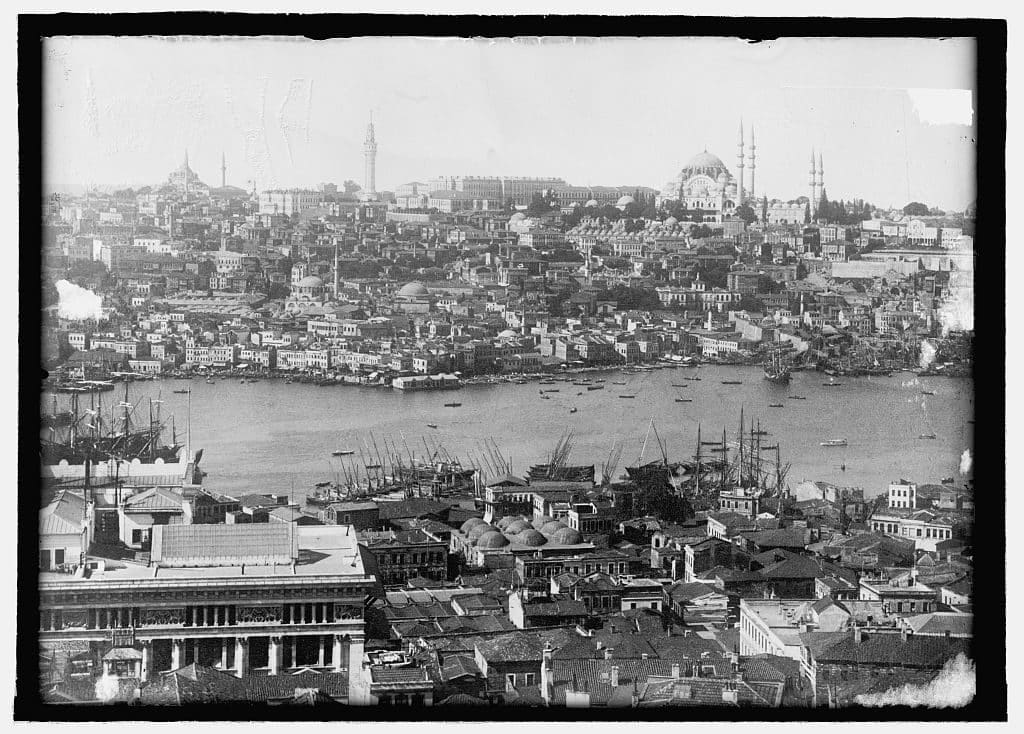
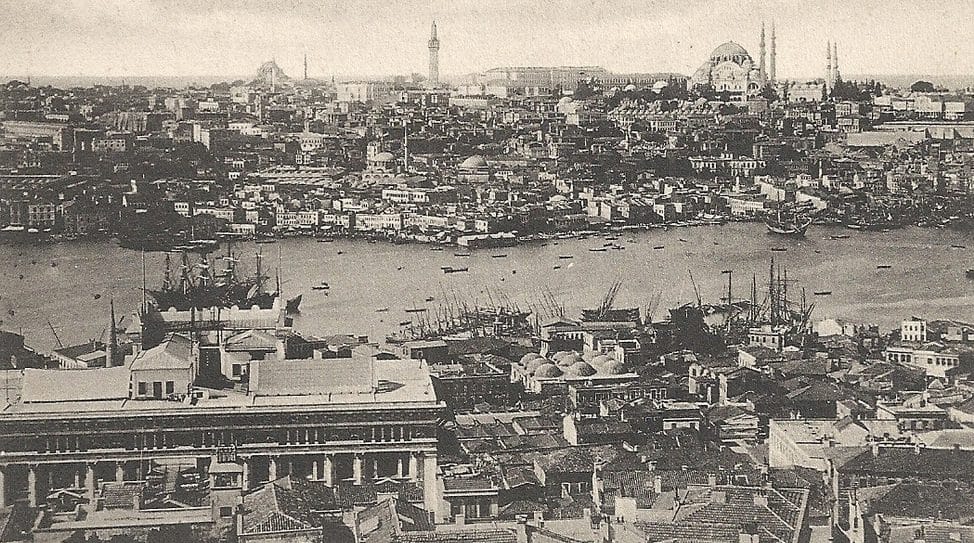
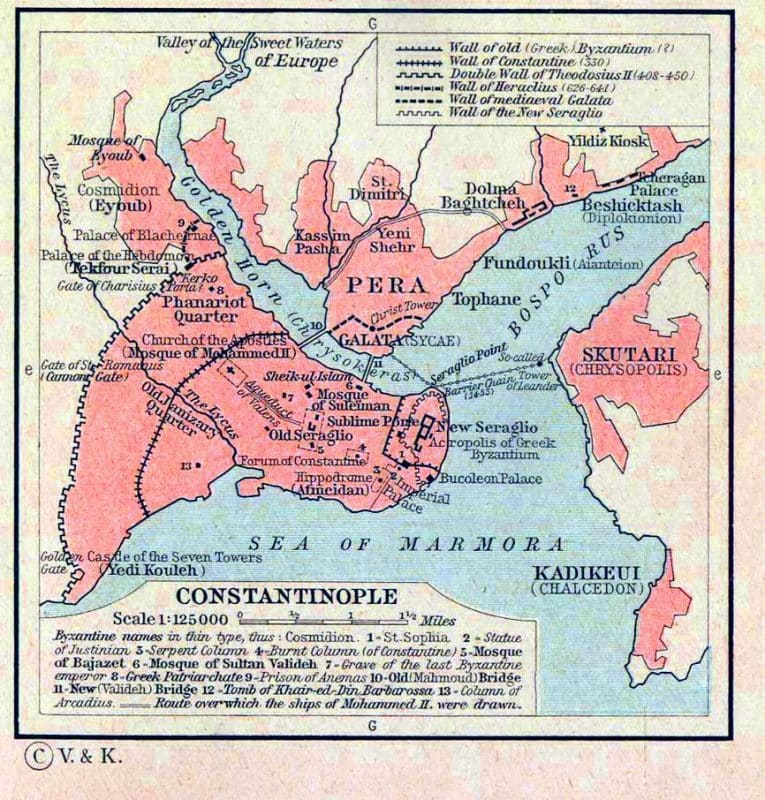
Constantinople. In the early 20th century, the very name conjured up images of an exotic metropolis. Constantinople was a multicultural center at the literal crossroads of Europe and Asia. The Bosphorus (also known as the Strait of Constantinople), which forms the boundary between the continents, divided Constantinople in half: one side European, the other Asian.

Over the course of its long history, Constantinople had been part of the Greek, Persian, Byzantine, Roman, and Ottoman Empires. The vibrant trading center was a melting pot of Turkish, Greek, Armenian, and Jewish culture. It was also a popular destination for tourists from all over the world.

*The city has been known as Istanbul since 1923.

A Center for Trade and Culture

Once the seat of Orthodox Christianity, Constantinople still boasted many beautiful churches belonging to numerous Christian denominations. The various synagogues throughout the city were evidence of a thriving Jewish community that traced its roots to the expulsion from Spain.

These houses of worship existed in close proximity to Ottoman mosques, including the famously beautiful imperial Blue Mosque and Hagia Sophia (a pre-Ottoman Christian church). Non-Muslims (dhimmi) in Constantinople enjoyed freedom of religion, but they had far fewer legal rights than their Muslim neighbors. The same was true throughout the Empire. Interestingly, Muslims only accounted for about half of the city’s population.

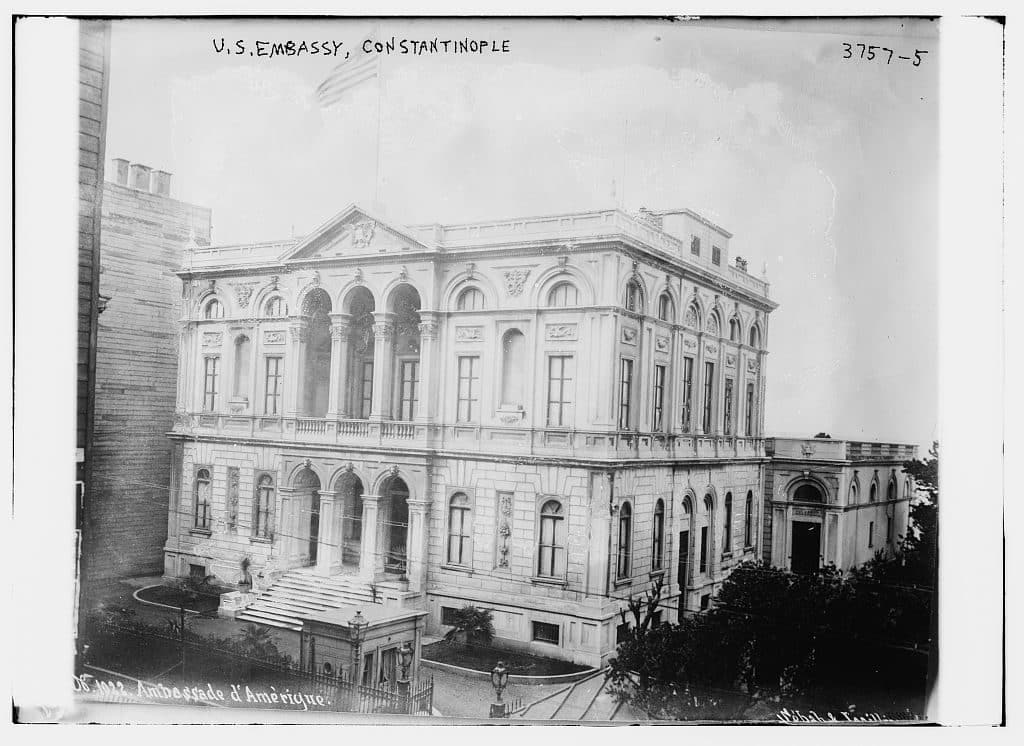
Constantinople was the capital of the Ottoman Empire. As a modern city, it had its share of amenities and architectural wonders. The city boasted the Topkapi Palace, which was the residence of the Sultan, and the Sublime Porte — the seat of government for the Empire. Many countries, including the United States, had embassies in Constantinople. Opulent palaces dotted the banks of the Bosphorus. The capital maintained an air of elegance and prosperity as the Ottoman Empire slowly declined.

Map of Constantinople from Historical Atlas by William Shepard, courtesy of University of Texas at Austin.

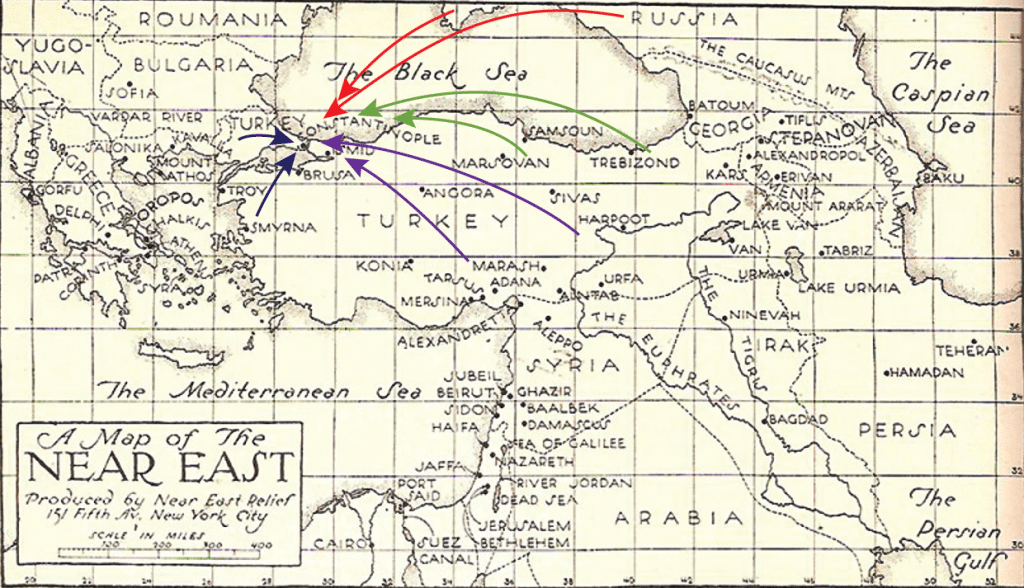
All roads from Asia Minor, the Caucasus, Southern Russia as far as the Volga, and from all the Balkan States, lead to Constantinople.

"The Refugee Situation in Constantinople," Constantinople To-day, 1922

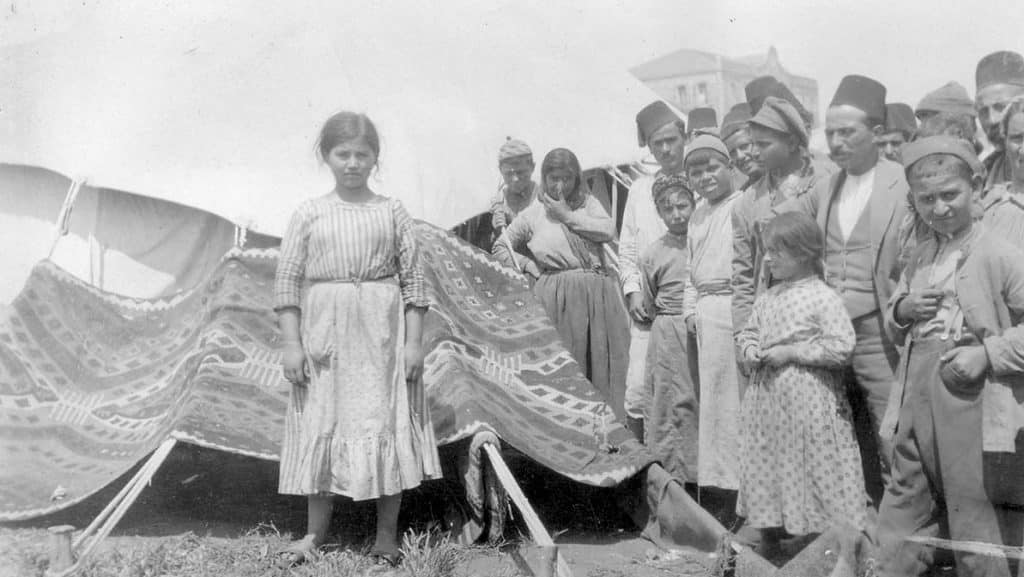
Refugees in a Suffering City

According to Constantinople To-day; Or, the Pathfinder Survey of Constantinople, a 1922 joint publication coauthored by eight aid organizations working in the city, an estimated 101,955 refugees were living in Constantinople by April 1921.

The American Red Cross reported that 65,000 Russian refugees had fled from the east. They traveled to escape a political revolution and a devastating famine in South Russia. Most of the Russian refugees came from Odessa, Novorossisk, and Crimea. The American Red Cross focused its work on these Russian refugees, with considerable assistance from French and British organizations.

The American Red Cross further estimated that roughly 27,000 Turkish refugees had flocked to Constantinople from territories in the grip of the Greco-Turkish War: Thrace to the west, and Smyrna to the southwest. The Turkish Red Crescent estimated that there were closer to 50,000 Turkish refugees in Constantinople.

There is in Constantinople the difficulty of language and custom, for in a single half hour…one can hear at least 30 languages spoken. Here East meets West and the ancient camel may be caught in the same photograph with the 1921 Ford automobile.

Introduction to Constantinople To-day, 1922