Skip to Main Content

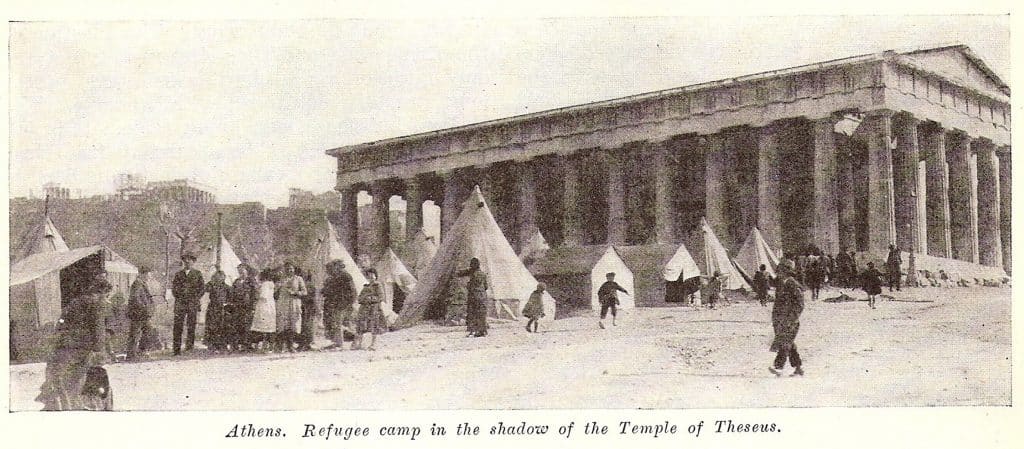
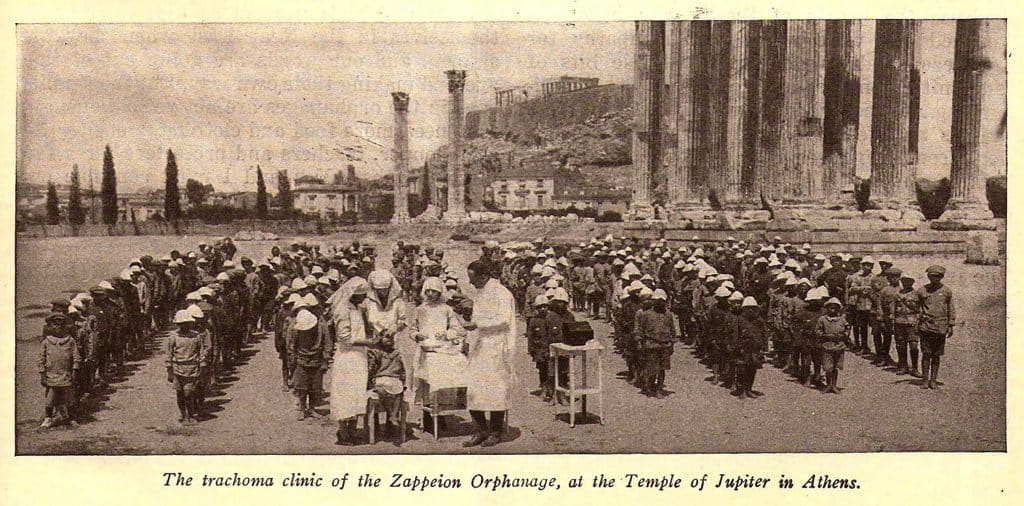
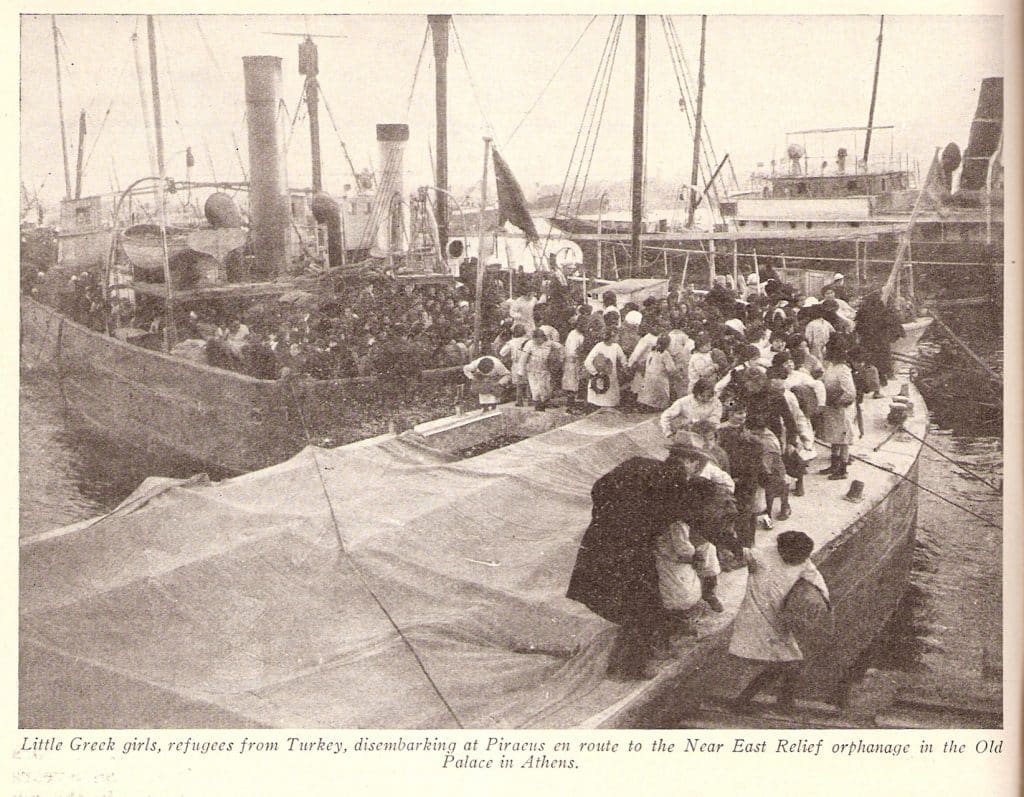
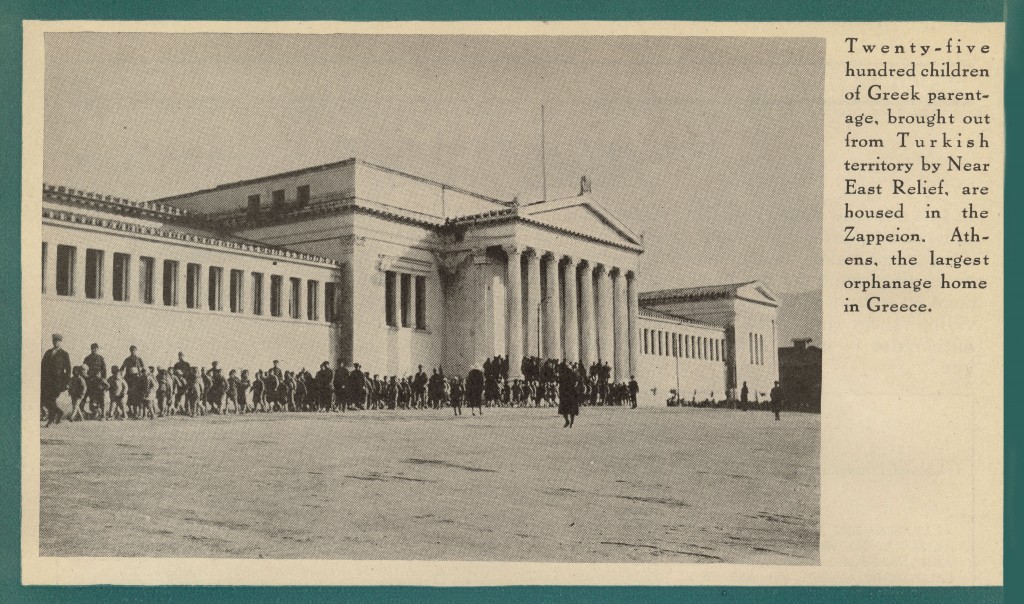
In late 1922, after the burning of Smyrna and the broader destruction of Greek populations across Anatolia, Near East Relief moved its surviving Anatolian orphans to Greece in a matter of weeks. The Greek government provided the Zappeion — a former Olympic exhibition hall in central Athens — as emergency housing.

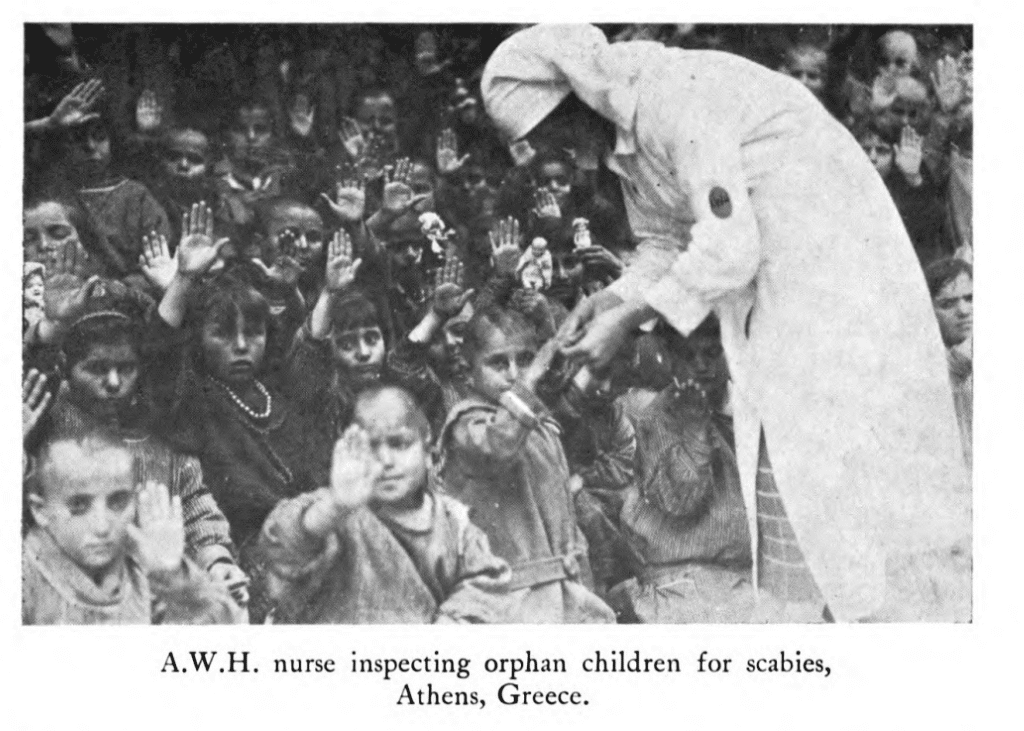
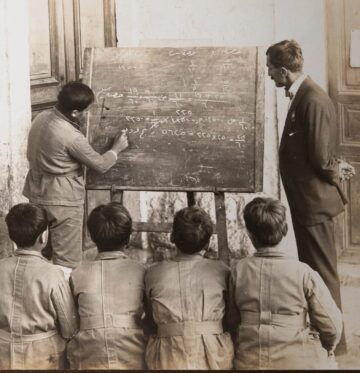
Within a few years, the work in Greece had widened to include education for the deaf children among the orphan population, a Lost and Found Bureau that reunited refugee families separated in flight, and a sustained medical campaign against trachoma, tuberculosis, and other diseases the children had carried with them across the Aegean.

This first of two Athens dispatches follows that improvised, public, and durable phase of Near East Relief’s Greek work.
From Anatolia to Athens

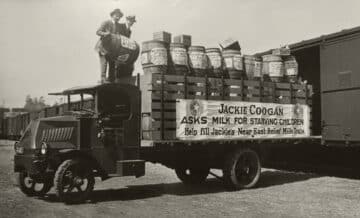
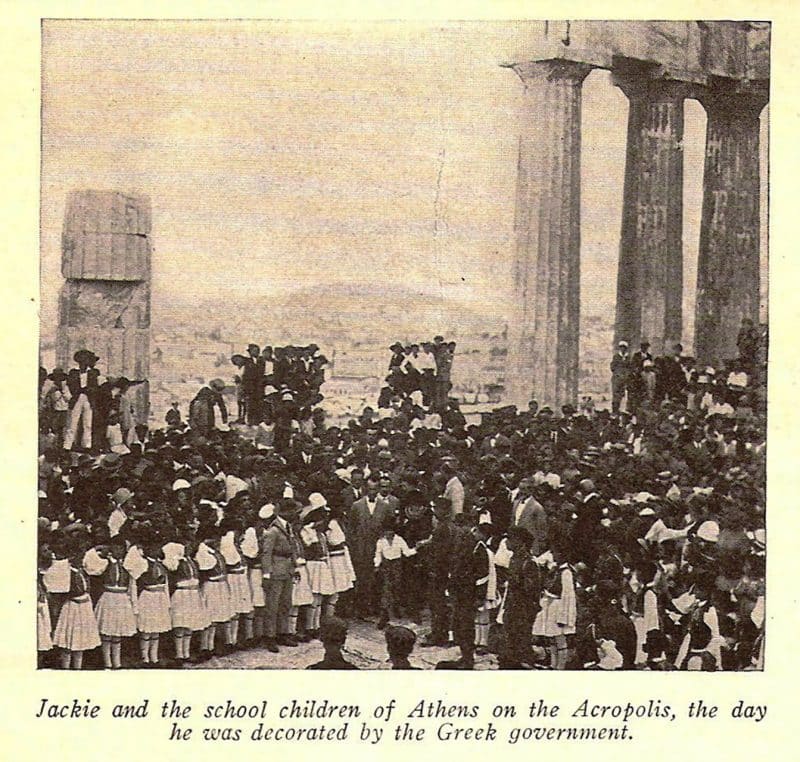
When child star Jackie Coogan arrived in Piraeus harbor in 1925, he was met by an astonishing sight: thousands of children greeted Jackie at the dock with deafening cheers. Boys in traditional Greek costumes held a huge welcome banner. Girls presented him with handmade gifts, including a small woven rug. The boys and girls welcomed the Hollywood star to Athens with heartfelt hospitality.

But these children were not your average fans. They were Near East Relief orphans — the real-life beneficiaries of Jackie’s humanitarian mission across the United States. When they welcomed Jackie to their city, they were welcoming him to home that was still very new to them.

At a time when the doors of all other nations were closed and barred, Greece not only admitted to her shores thousands of orphans…but she gave every possible assistance by requisitioning, rent free, the necessary public buildings and private houses for the accommodation of these exiled, homeless children.

Near East Relief Report to Congress for 1922

Reuniting Families

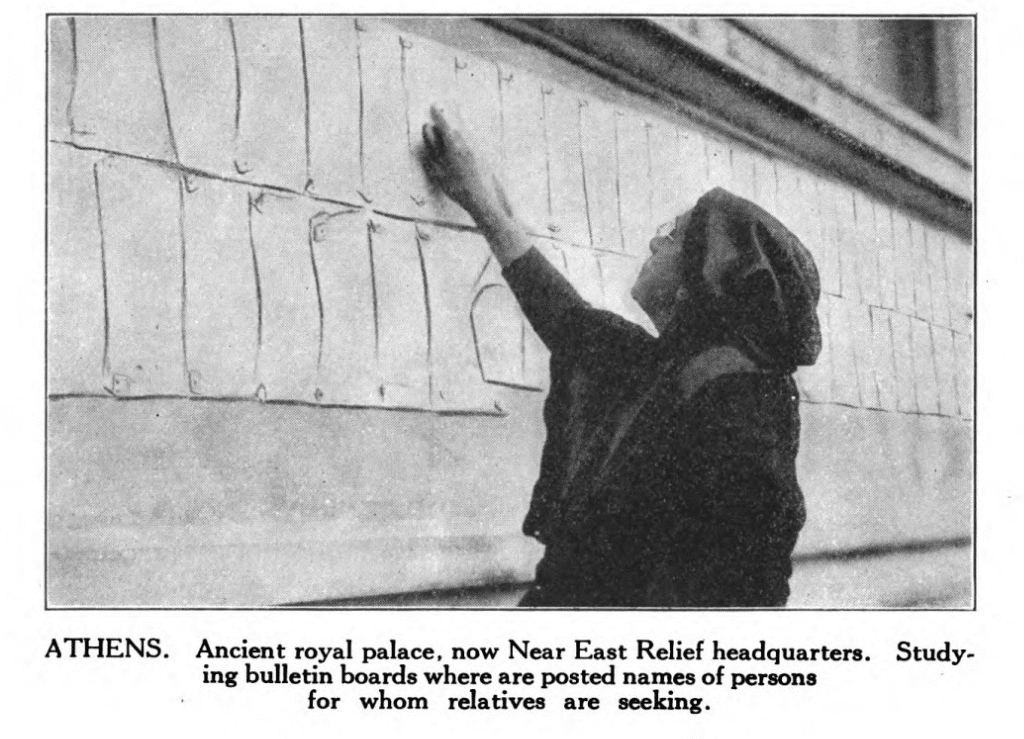
Two Near East Relief workers in Athens had a very special job. Miss Myrtle Nolan and Miss Louise MacLachlan managed a project lovingly known as the Lost & Found Bureau. They weren’t concerned with reuniting people with lost belongings. It was their job to reunite refugees with family members.

The mass migrations of 1922 had torn families apart. Many refugees began their search for lost children and other family members as soon as they set foot on Greek soil. Additionally, extended family members in other countries were desperate for news of relatives that had been swept up in the refugee crisis. Every day, refugees poured into the Near East Relief office to look at the lists of new arrivals, hoping to find a lost child, parent, or sibling.

In its first month of operation, the Lost & Found Bureau received 12,000 requests for help finding a loved one. Nolan and MacLachlan posted these inquiries in 500 refugee settlements throughout Greece. By March 1923, they had put 2,000 refugees in touch with family members. By December 1923, Near East Relief had helped to reunite 25,000 people.

A New Era in Athens

By 1929, Near East Relief was only operating two orphanages in Greece; one in Athens, and the other in Syra. The organization transitioned to the Near East Foundation in 1930.

NEF drew on many of the lessons learned from Near East Relief’s work with orphans. Greece served as an incubator for agricultural and public health projects that NEF would go on to replicate in numerous countries.

One of NEF’s key projects in Athens was a direct result of Near East Relief’s work with orphans in that city. NEF created Youth Welfare Centers to help the young orphanage graduates to adapt to their new lives. The Centers soon grew to include children and young adults who came to the city from the country to work. At the Centers, boys and girls learned skills that would help them to find better employment. They also enjoyed social activities and educational programs.

One of NEF’s key projects in Athens was a direct result of Near East Relief’s work with orphans in that city. NEF created Youth Welfare Centers to help the young orphanage graduates to adapt to their new lives. The Centers soon grew to include children and young adults who came to the city from the country to work. At the Centers, boys and girls learned skills that would help them to find better employment. They also enjoyed social activities and educational programs.

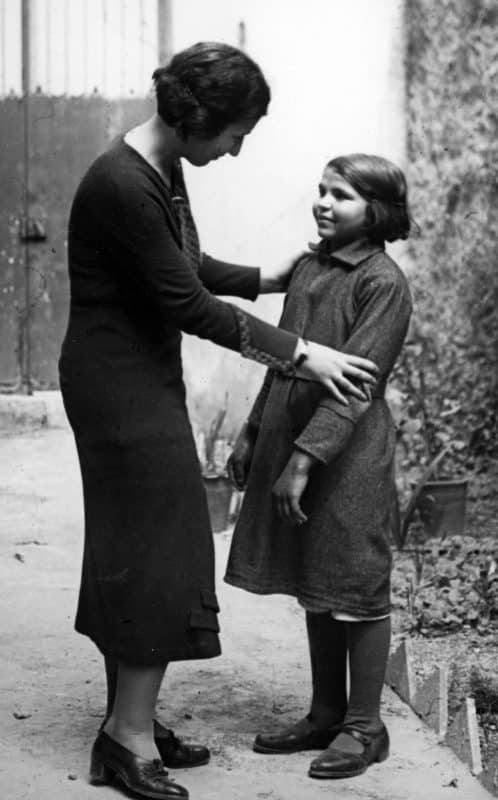
The Athens model was so successful that NEF replicated the Youth Welfare Center in four other Greek cities with large youth populations. The Greek government assumed the oversight of the Centers in 1934, with NEF worker Nausica Parapantakis (left) becoming Director of the Working Girls Centers for the Greek Ministry of Welfare.

Left: Nausica Parapantakis speaks with Youth Welfare Center attendee Constantina Rigopolou, age 12. Constantina came to Athens to work as a maid at the age of nine, when she was sent from her home in the provinces.