
• Exhibits
    • Answering the Call
      How America Mobilized

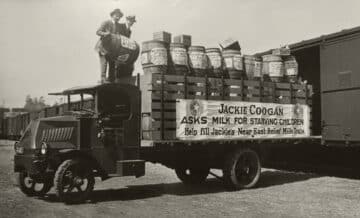
      A modest fundraising campaign became a nationwide movement uniting presidents, celebrities, and schoolchildren around a common cause.

      Enter the Permanent Exhibit
    • Relief Worker Memorial

      A living memorial to the more than 1,000 Americans and international colleagues who served, 1915–1930.

    • Voices of Near East Relief

      First-person accounts from relief workers and survivors

    • Dispatches

      In-depth stories from the orphanages, relief workers, and campaigns of Near East Relief

    • See All Exhibits
  • Collections
    • Collections
      Photographs, letters, and field reports from the relief effort

      Browse archival collections from NER relief workers and orphanages across Armenia, Greece, Lebanon, Syria, and Turkey.

      View Featured Collections
    • Bayard Dodge Photographs (1922)

      Follow Armenian orphans from Anatolia to NER orphanages around Beirut.

    • Barclay Acheson Photographs (1922–1928)

      Follow NER’s overseas operations through Barclay Acheson’s photographs, 1922–1928.

    • Near East Relief Periodicals (1918–1927)

      Read NER’s field reports, photographs, and appeals in its periodicals.

  • Resources
    • Resources
      For families, students, educators, and researchers

      Trace a family story, teach this history, or conduct original research. Start here to find the right path into the archive.

      View Resources
    • For Families

      Search by orphanage location and contribute family documents

    • For Students & Researchers

      Primary sources, research tools, and archival guides for students and scholars

    • For Educators

      Curriculum guide, documentary, and panel exhibit for the classroom

    • Research Directory

      Find Near East Relief archives worldwide

  • Documentary
  • About
  • News & Updates
  • Support
  • Donate
Skip to Main Content
Search
  • About
  • News & Updates
  • Support
  • Donate
  • Exhibits
    • Answering the Call
      How America Mobilized

      A modest fundraising campaign became a nationwide movement uniting presidents, celebrities, and schoolchildren around a common cause.

      Enter the Permanent Exhibit
    • Relief Worker Memorial

      A living memorial to the more than 1,000 Americans and international colleagues who served, 1915–1930.

    • Voices of Near East Relief

      First-person accounts from relief workers and survivors

    • Dispatches

      In-depth stories from the orphanages, relief workers, and campaigns of Near East Relief

    • See All Exhibits
  • Collections
    • Collections
      Photographs, letters, and field reports from the relief effort

      Browse archival collections from NER relief workers and orphanages across Armenia, Greece, Lebanon, Syria, and Turkey.

      View Featured Collections
    • Bayard Dodge Photographs (1922)

      Follow Armenian orphans from Anatolia to NER orphanages around Beirut.

    • Barclay Acheson Photographs (1922–1928)

      Follow NER’s overseas operations through Barclay Acheson’s photographs, 1922–1928.

    • Near East Relief Periodicals (1918–1927)

      Read NER’s field reports, photographs, and appeals in its periodicals.

  • Resources
    • Resources
      For families, students, educators, and researchers

      Trace a family story, teach this history, or conduct original research. Start here to find the right path into the archive.

      View Resources
    • For Families

      Search by orphanage location and contribute family documents

    • For Students & Researchers

      Primary sources, research tools, and archival guides for students and scholars

    • For Educators

      Curriculum guide, documentary, and panel exhibit for the classroom

    • Research Directory

      Find Near East Relief archives worldwide

  • Documentary
Relief Worker Memorial

Laird A. Archer

Laird A. Archer

Laird Archer (1892–1981) began his career at the age of 18 as a journalist for the Wichita Beacon. He worked his way up to Sunday editor, taking a leave of absence to volunteer with the War Work Council in France. Archer became the personal secretary to Kansas Governor Henry J. Allen, owner of the Wichita Beacon and a prominent NER supporter. Archer participated in a League of Nations survey of the Assyrian population in Persia in 1922 and joined NER the same year. His first assignment was a survey of living conditions in Turkey, the Caucasus, Persia, Syria, and Palestine. He was offered the position of Foreign Secretary in 1923. Archer held this New York City-based position until 1930, when he was appointed Foreign Director and moved to Athens.

When the Italian Army invaded Greece in 1940, Archer served on the Greek War Relief Association’s administrative committee. A year later, the German Army closed the Greek consulate in Athens based on America’s entry into the war. The Nazis ordered the American Legation to leave Greece, but granted no exit papers. With help from the embassy in Rome, American citizens managed to leave in small groups each week. The Archers, along with Meverette Smith, departed on July 28, 1941. Once in Rome, Archer worked with embassy staff to ensure forty-four remaining Americans were able to leave Athens. Laird Archer returned to America in 1941 and wrote Balkan Journal, a book about his experiences in Greece.

Soon, Archer’s attention turned to post-war reconstruction. NEF granted him a leave of absence to work as the chief of the U.S. Office of Foreign Relief and Rehabilitation in Cairo. A few months later, he was selected to serve as chief of the United Nations Relief and Rehabilitation Administration (UNRRA) mission to Greece and Albania. He arrived in Greece in October 1944, only ten days after the German Army departed. Archer resumed his duties as NEF Foreign Director in Athens in 1945. He helped to create relief and rehabilitation programs for the many Greeks that had suffered profoundly during the war.

In his thirty-year career with NEF, Laird Archer left an impression on nearly every aspect of the organization. He received the Grand Commander of the Order of the Phoenix and the Commander of the Order of the Redeemer awards from the Greek government for his great service to that country and also received the Order of Scanderberg from the government of Albania. During his retirement, Archer lectured extensively and published a second book, Balkan Tragedy, in 1977. Laird Archer died in 1981 at the age of 88.

See more details

Connect

Join our email list to get updates

Subscribe to Email

  • Facebook

Contact

Near East Foundation
110 W. Fayette St., Suite 710
Syracuse, NY 13202

nerhs@neareast.org
Contact Us

Links

  • Login to Visit the Full Archive

© 2026 Near East Relief Historical Society

  • Rights & Use Policy

Museum Website Design by Landslide Creative