• Exhibits
    • Answering the Call
      How America Mobilized

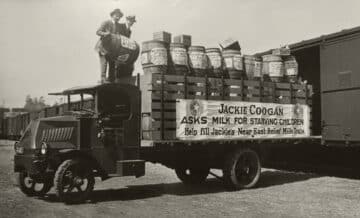
      A modest fundraising campaign became a nationwide movement uniting presidents, celebrities, and schoolchildren around a common cause.

      Enter the Permanent Exhibit
    • Relief Worker Memorial

      A living memorial to the more than 1,000 Americans and international colleagues who served, 1915–1930.

    • Voices of Near East Relief

      First-person accounts from relief workers and survivors

    • Dispatches

      In-depth stories from the orphanages, relief workers, and campaigns of Near East Relief

    • See All Exhibits
  • Collections
    • Collections
      Photographs, letters, and field reports from the relief effort

      Browse archival collections from NER relief workers and orphanages across Armenia, Greece, Lebanon, Syria, and Turkey.

      View Featured Collections
    • Bayard Dodge Photographs (1922)

      Follow Armenian orphans from Anatolia to NER orphanages around Beirut.

    • Barclay Acheson Photographs (1922–1928)

      Follow NER’s overseas operations through Barclay Acheson’s photographs, 1922–1928.

    • Near East Relief Periodicals (1918–1927)

      Read NER’s field reports, photographs, and appeals in its periodicals.

  • Resources
    • Resources
      For families, students, educators, and researchers

      Trace a family story, teach this history, or conduct original research. Start here to find the right path into the archive.

      View Resources
    • For Families

      Search by orphanage location and contribute family documents

    • For Students & Researchers

      Primary sources, research tools, and archival guides for students and scholars

    • For Educators

      Curriculum guide, documentary, and panel exhibit for the classroom

    • Research Directory

      Find Near East Relief archives worldwide

  • Documentary
  • About
  • News & Updates
  • Support
  • Donate
Skip to Main Content
Search
  • About
  • News & Updates
  • Support
  • Donate
  • Exhibits
    • Answering the Call
      How America Mobilized

      A modest fundraising campaign became a nationwide movement uniting presidents, celebrities, and schoolchildren around a common cause.

      Enter the Permanent Exhibit
    • Relief Worker Memorial

      A living memorial to the more than 1,000 Americans and international colleagues who served, 1915–1930.

    • Voices of Near East Relief

      First-person accounts from relief workers and survivors

    • Dispatches

      In-depth stories from the orphanages, relief workers, and campaigns of Near East Relief

    • See All Exhibits
  • Collections
    • Collections
      Photographs, letters, and field reports from the relief effort

      Browse archival collections from NER relief workers and orphanages across Armenia, Greece, Lebanon, Syria, and Turkey.

      View Featured Collections
    • Bayard Dodge Photographs (1922)

      Follow Armenian orphans from Anatolia to NER orphanages around Beirut.

    • Barclay Acheson Photographs (1922–1928)

      Follow NER’s overseas operations through Barclay Acheson’s photographs, 1922–1928.

    • Near East Relief Periodicals (1918–1927)

      Read NER’s field reports, photographs, and appeals in its periodicals.

  • Resources
    • Resources
      For families, students, educators, and researchers

      Trace a family story, teach this history, or conduct original research. Start here to find the right path into the archive.

      View Resources
    • For Families

      Search by orphanage location and contribute family documents

    • For Students & Researchers

      Primary sources, research tools, and archival guides for students and scholars

    • For Educators

      Curriculum guide, documentary, and panel exhibit for the classroom

    • Research Directory

      Find Near East Relief archives worldwide

  • Documentary
Relief Worker Memorial

Mary Harin Jaquith

Jaquith, Mary Harin

Mary Harin Jaquith, the wife of H.C. Jaquith, was also a prominent figure in the Near East Relief.

H.C. Jaquith held a bachelor’s degree from Trinity College, a master’s degree from Columbia University, and a doctorate of divinity from Union Theological Seminary. Jaquith began his career as the assistant pastor of the First Presbyterian Church in New York City in 1912. Five years later he was named assistant secretary to Near East Relief. He toured the Near East in 1919 as leader of the Sunday School Commission and made a preliminary assessment of needs.

In 1921, Jaquith became Managing Director of NER in Constantinople. He oversaw operations for 180,000 orphans and refugees in the Constantinople area. Jaquith’s impassioned cablegrams from the field painted a horrific picture of the on-going refugee situation. His accounts of the plight of refugees after the burning of Smyrna in September 1922 were particularly chilling. Jaquith wrote that the Turkish Nationalist army was taking advantage of the chaos to conduct additional deportations. His eloquent articles and pleas for aid were frequently published in The New Near East magazine and national news outlets.

In 1923, Jaquith was appointed to help oversee the resettlement of approximately 400,000 ethnic Turks from Greece as part of the population exchange between Greece and Turkey brought on by the Smyrna disaster. He negotiated the safe release of thousands of prisoners of the Greco-Turkish War. Both governments decorated Jaquith for his work.

Jaquith met Marie Harin at the NER office in Constantinople. A native of Russia, she grew up speaking Russian, French, and English. Her family fled Yalta in 1920. When Harin’s parents moved on to Yugoslavia, she chose to remain in Constantinople, where she worked as a NER interpreter and adopted the name “Mary.” The couple was married in Yugoslavia in November 1925 and made their home in Constantinople.

H.C. Jaquith became the NER Associate General Secretary in 1927. He was instrumental in overseeing the transition from Near East Relief to the Near East Foundation. The family moved to New York City in 1929. Harold Jaquith served as an executive officer with NEF from 1930 to 1933, when he left to pursue a career in higher education administration. He died in April 1943 at the age of 54.

Mary Jaquith spent the War years working for the FBI in New Haven, Connecticut, where her language skills were put to good use. She went on to teach French and Russian at the high school and college levels. In 1946, she became one of the United Nations’ first simultaneous interpreters. She retired from full-time interpreting at the age of 60 but continued to work on a freelance basis until age 82. Mary Jaquith died in 1985 at the age of 87.

See more details

Connect

Join our email list to get updates

Subscribe to Email

  • Facebook

Contact

Near East Foundation
110 W. Fayette St., Suite 710
Syracuse, NY 13202

nerhs@neareast.org
Contact Us

Links

  • Login to Visit the Full Archive

© 2026 Near East Relief Historical Society

  • Rights & Use Policy

Museum Website Design by Landslide Creative