• Exhibits
    • Answering the Call
      How America Mobilized

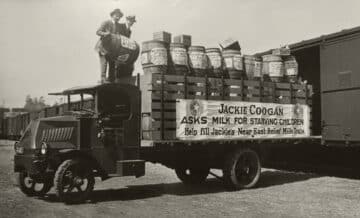
      A modest fundraising campaign became a nationwide movement uniting presidents, celebrities, and schoolchildren around a common cause.

      Enter the Permanent Exhibit
    • Relief Worker Memorial

      A living memorial to the more than 1,000 Americans and international colleagues who served, 1915–1930.

    • Voices of Near East Relief

      First-person accounts from relief workers and survivors

    • Dispatches

      In-depth stories from the orphanages, relief workers, and campaigns of Near East Relief

    • See All Exhibits
  • Collections
    • Collections
      Photographs, letters, and field reports from the relief effort

      Browse archival collections from NER relief workers and orphanages across Armenia, Greece, Lebanon, Syria, and Turkey.

      View Featured Collections
    • Bayard Dodge Photographs (1922)

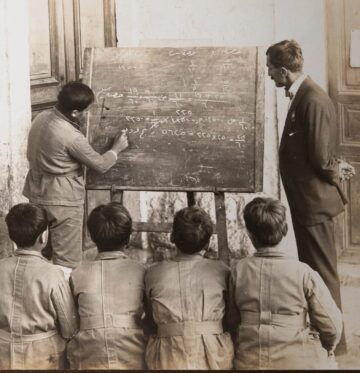
      Follow Armenian orphans from Anatolia to NER orphanages around Beirut.

    • Barclay Acheson Photographs (1922–1928)

      Follow NER’s overseas operations through Barclay Acheson’s photographs, 1922–1928.

    • Near East Relief Periodicals (1918–1927)

      Read NER’s field reports, photographs, and appeals in its periodicals.

  • Resources
    • Resources
      For families, students, educators, and researchers

      Trace a family story, teach this history, or conduct original research. Start here to find the right path into the archive.

      View Resources
    • For Families

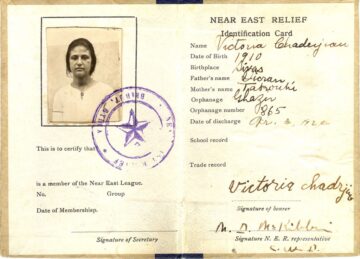
      Search by orphanage location and contribute family documents

    • For Students & Researchers

      Primary sources, research tools, and archival guides for students and scholars

    • For Educators

      Curriculum guide, documentary, and panel exhibit for the classroom

    • Research Directory

      Find Near East Relief archives worldwide

  • Documentary
  • About
  • News & Updates
  • Support
  • Donate
Skip to Main Content
Search
  • About
  • News & Updates
  • Support
  • Donate
  • Exhibits
    • Answering the Call
      How America Mobilized

      A modest fundraising campaign became a nationwide movement uniting presidents, celebrities, and schoolchildren around a common cause.

      Enter the Permanent Exhibit
    • Relief Worker Memorial

      A living memorial to the more than 1,000 Americans and international colleagues who served, 1915–1930.

    • Voices of Near East Relief

      First-person accounts from relief workers and survivors

    • Dispatches

      In-depth stories from the orphanages, relief workers, and campaigns of Near East Relief

    • See All Exhibits
  • Collections
    • Collections
      Photographs, letters, and field reports from the relief effort

      Browse archival collections from NER relief workers and orphanages across Armenia, Greece, Lebanon, Syria, and Turkey.

      View Featured Collections
    • Bayard Dodge Photographs (1922)

      Follow Armenian orphans from Anatolia to NER orphanages around Beirut.

    • Barclay Acheson Photographs (1922–1928)

      Follow NER’s overseas operations through Barclay Acheson’s photographs, 1922–1928.

    • Near East Relief Periodicals (1918–1927)

      Read NER’s field reports, photographs, and appeals in its periodicals.

  • Resources
    • Resources
      For families, students, educators, and researchers

      Trace a family story, teach this history, or conduct original research. Start here to find the right path into the archive.

      View Resources
    • For Families

      Search by orphanage location and contribute family documents

    • For Students & Researchers

      Primary sources, research tools, and archival guides for students and scholars

    • For Educators

      Curriculum guide, documentary, and panel exhibit for the classroom

    • Research Directory

      Find Near East Relief archives worldwide

  • Documentary
Relief Worker Memorial

Stanley Kerr

Kerr, Stanley

Stanley E. Kerr of Hopewell, New Jersey, was in the first large group of NER workers to ship out after WWI ended, in 1919. In Aleppo, Syria, Kerr—who had studied biochemistry—established a lab to screen for malaria and typhus. He also worked as a photographer, documenting the orphans and recording their stories. He was deeply committed to rescuing women and children from captivity in Turkish and Kurdish homes. He estimated that he and his colleagues rescued more than 450 girls within a 50-mile radius of the city over the course of a few months.

Kerr transferred to Marash to become NER’s superintendent of relief work in Cilicia. While in Marash, Kerr met Elsa Reckman, a mathematics teacher at Marash Girls’ College. The couple would later marry in a NER personnel house.

The Turkish Nationalist regime besieged Marash in January 1920. Turkish soldiers massacred thousands of repatriated Armenians and attacked the American Hospital. NER workers converted schools and orphanages into safe havens. As violence in Marash increased, NER determined that the relief stations in Cilicia were no longer safe. In 1920, Elsa and Stanley were instrumental in evacuating children from NER orphanages in Marash to Syria. This arduous 500-mile journey through mountains and snow was made largely on foot.

Once in Beirut, Stanley Kerr served briefly as treasurer for NER operations in Syria and Palestine. He soon became the director of the new Nahr Ibrahim orphanage. The orphanage opened with about 650 boys in January 1923. By August it housed nearly 1000—all of whom had been evacuated from the Turkish interior. The Kerrs knew many of the boys from Marash. Stanley supervised training in marketable trades; Elsa oversaw their education.

Tragedy struck Nahr Ibrahim in its first year when a malaria epidemic spread through the orphanage community. Many of the boys died. Nahr Ibrahim was closed and the remaining boys were transferred to the orphanage at Jubeil.

Stanley and Elsa Kerr traveled to America, where Kerr earned a Ph.D. in biochemistry from the University of Pennsylvania in 1925. They returned to Beirut, where he became the Chair of the Department of Biochemistry at the American University of Beirut (AUB). Elsa Kerr taught Mathematics at the Beirut Women’s College and in 1950 was named Dean of Women at AUB. The Kerrs raised four children in Beirut before retiring to Princeton, New Jersey.

Stanley Kerr published his memoirs, "Lions of Marash", in 1973. He died in 1976, with Elsa following him in 1985.

Their son, Malcolm Kerr, also devoted his life to the region. A respected and well-known political scientist, he taught at the American University of Cairo and U.C.L.A and authored several books on relations among Middle East countries. He was named president of the American University in Beirut in 1982. Sadly, he served in this role for less than two years. Kerr was assassinated by two gunmen while walking to his office on campus on January 18, 1984.

Malcolm Kerr’s son, John Kerr, a professor at Michigan State University’s Department of Community Sustainability, continues his family’s proud legacy. He serves on NEF’s Academic Council and advises on NEF programs.

See more details

Connect

Join our email list to get updates

Subscribe to Email

  • Facebook

Contact

Near East Foundation
110 W. Fayette St., Suite 710
Syracuse, NY 13202

nerhs@neareast.org
Contact Us

Links

  • Login to Visit the Full Archive

© 2026 Near East Relief Historical Society

  • Rights & Use Policy

Museum Website Design by Landslide Creative