
• Exhibits
    • Answering the Call
      How America Mobilized

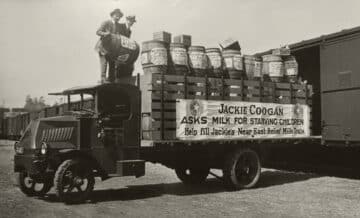
      A modest fundraising campaign became a nationwide movement uniting presidents, celebrities, and schoolchildren around a common cause.

      Enter the Permanent Exhibit
    • Relief Worker Memorial

      A living memorial to the more than 1,000 Americans and international colleagues who served, 1915–1930.

    • Voices of Near East Relief

      First-person accounts from relief workers and survivors

    • Dispatches

      In-depth stories from the orphanages, relief workers, and campaigns of Near East Relief

    • See All Exhibits
  • Collections
    • Collections
      Photographs, letters, and field reports from the relief effort

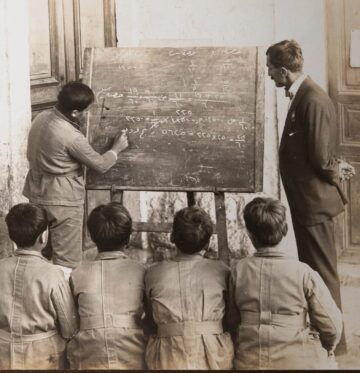
      Browse archival collections from NER relief workers and orphanages across Armenia, Greece, Lebanon, Syria, and Turkey.

      View Featured Collections
    • Bayard Dodge Photographs (1922)

      Follow Armenian orphans from Anatolia to NER orphanages around Beirut.

    • Barclay Acheson Photographs (1922–1928)

      Follow NER’s overseas operations through Barclay Acheson’s photographs, 1922–1928.

    • Near East Relief Periodicals (1918–1927)

      Read NER’s field reports, photographs, and appeals in its periodicals.

  • Resources
    • Resources
      For families, students, educators, and researchers

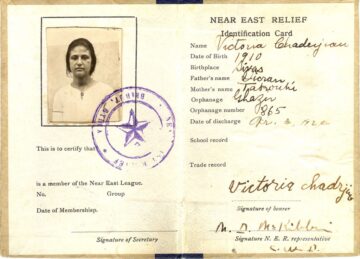
      Trace a family story, teach this history, or conduct original research. Start here to find the right path into the archive.

      View Resources
    • For Families

      Search by orphanage location and contribute family documents

    • For Students & Researchers

      Primary sources, research tools, and archival guides for students and scholars

    • For Educators

      Curriculum guide, documentary, and panel exhibit for the classroom

    • Research Directory

      Find Near East Relief archives worldwide

  • Documentary
  • About
  • News & Updates
  • Support
  • Donate
Skip to Main Content
Search
  • About
  • News & Updates
  • Support
  • Donate
  • Exhibits
    • Answering the Call
      How America Mobilized

      A modest fundraising campaign became a nationwide movement uniting presidents, celebrities, and schoolchildren around a common cause.

      Enter the Permanent Exhibit
    • Relief Worker Memorial

      A living memorial to the more than 1,000 Americans and international colleagues who served, 1915–1930.

    • Voices of Near East Relief

      First-person accounts from relief workers and survivors

    • Dispatches

      In-depth stories from the orphanages, relief workers, and campaigns of Near East Relief

    • See All Exhibits
  • Collections
    • Collections
      Photographs, letters, and field reports from the relief effort

      Browse archival collections from NER relief workers and orphanages across Armenia, Greece, Lebanon, Syria, and Turkey.

      View Featured Collections
    • Bayard Dodge Photographs (1922)

      Follow Armenian orphans from Anatolia to NER orphanages around Beirut.

    • Barclay Acheson Photographs (1922–1928)

      Follow NER’s overseas operations through Barclay Acheson’s photographs, 1922–1928.

    • Near East Relief Periodicals (1918–1927)

      Read NER’s field reports, photographs, and appeals in its periodicals.

  • Resources
    • Resources
      For families, students, educators, and researchers

      Trace a family story, teach this history, or conduct original research. Start here to find the right path into the archive.

      View Resources
    • For Families

      Search by orphanage location and contribute family documents

    • For Students & Researchers

      Primary sources, research tools, and archival guides for students and scholars

    • For Educators

      Curriculum guide, documentary, and panel exhibit for the classroom

    • Research Directory

      Find Near East Relief archives worldwide

  • Documentary
Relief Worker Memorial

Frank W. Peers

Frank W. Peers

Frank Wagner Peers was born in Topeka, Kansas, in 1891. He attended Topeka High School and Washburn College and then moved to Boston to study architecture. During the First World War, Frank and his sister Adeline Peers served together in the Harvard Ambulance Corps in France.

In February 1919, Frank and Adeline sailed from Hoboken aboard the Leviathan with the first large American relief delegation to enter the postwar Near East. Frank was one of seven bacteriologists in the party, recruited to address the medical and public-health needs of the postwar Ottoman territories. The party reached Constantinople in March 1919 via Brest, Marseilles, and Salonika. Typhus, cholera, smallpox, and trachoma were widespread in the refugee population, and laboratory diagnostics were essential to NER's medical operations.

Peers served in Turkey through 1920. The three photographic albums he compiled during this period are now held at the Houghton Library at Harvard. The albums document his work and the wider NER operation in the years immediately following the Armistice.

He returned to Boston in 1920 to study art. In September 1924, Asia magazine published his wood engraving On the Bosporus on its cover. In 1926 he studied painting at Fontainebleau before returning to New York, where he worked as a painter, illustrator, designer, and wood engraver.

Frank Wagner Peers died in New York City on April 4, 1938, at the age of forty-six.

See more details

Connect

Join our email list to get updates

Subscribe to Email

  • Facebook

Contact

Near East Foundation
110 W. Fayette St., Suite 710
Syracuse, NY 13202

nerhs@neareast.org
Contact Us

Links

  • Login to Visit the Full Archive

© 2026 Near East Relief Historical Society

  • Rights & Use Policy

Museum Website Design by Landslide Creative