
Collections
George R. Swain Photographs (1919–1920)
George Robert Swain (1866–1947) was the University of Michigan’s photographer from 1913 to 1947. In 1919 and 1920 he traveled with the classicist Francis W. Kelsey on an expedition through Europe and the Near East. Kelsey went to study ancient sites and manuscripts, and also to see the region’s refugee camps, orphanages and training schools for himself. Rear Admiral Mark L. Bristol, the American High Commissioner at Constantinople (Istanbul), arranged for the party to cross Turkey by train in freight cars fitted up for Near East Relief. They traveled by way of Adana and Tarsus to Aleppo in December 1919 and January 1920.
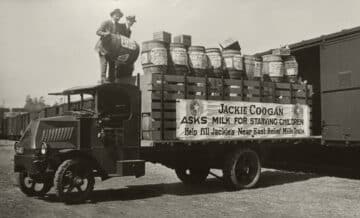
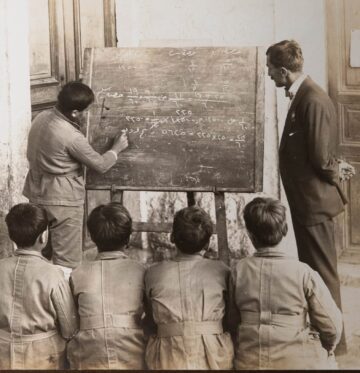
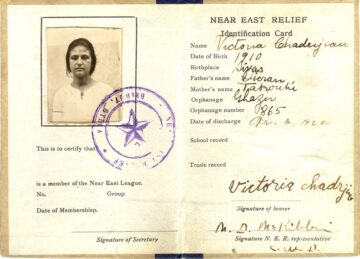
Swain photographed the relief work the party visited. In Constantinople he recorded the bakery that supplied bread to the orphanages and the staff of the Canadian Hospital for Tubercular Children at Yedi Koule. At Adana he photographed the Armenian refugee camp and girls who wove rugs at Miss Webb’s. At Tarsus, women and girls spun and wove at the relief workshop. At Aleppo, a center of relief for survivors of the Armenian Genocide, he photographed orphanage courtyards, the relief eye hospital, and Armenian girls tattooed by their former captors. At Aintab (Gaziantep) he photographed the Armenian boys’ orphanage, the Refuge Home and the looms at Miss Kelley’s. Two lantern slides copy Near East Relief cables of 1921, one warning of new deportations threatened at Marash.
Most of the photographs come from the Kelsey Museum of Archaeology, which holds the expedition negatives. Eight are captioned prints from Swain’s papers at the Bentley Historical Library. NERHS downloaded the files from the University of Michigan Library Digital Collections in October 2026.
Sources: University of Michigan Library Digital Collections (Kelsey Museum of Archaeology; Bentley Historical Library); James L. Barton, Story of Near East Relief (1930); The Missionary Herald, 1919–1920.