
Collections
Orphanages
Between 1915 and 1930, Near East Relief (NER) cared for 132,000 children in orphanages from the Caucasus to Lebanon and Greece. The children had lost parents to genocide, war, and famine. The Ottoman government and, after 1919, Turkish Nationalist forces carried out the genocides of Armenians, Greeks, and Assyrians. Some children had a widowed mother who could not support them. NER’s work ran from emergency feeding and medical care to years of schooling and preparation for life after the orphanage.
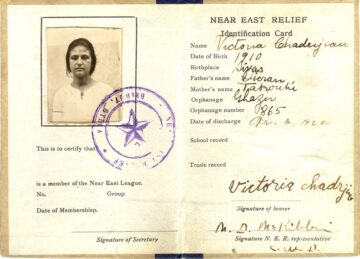
Children arrived hungry, ragged, and sick, and there were often more children than places. Around 1920 at Erivan, Sirvert Tatoanian was one of hundreds of children waiting outside Orphanage No. 7. NER housed children on college campuses and in factories, palaces, and army barracks, and built dormitories, schools, hospitals, and workshops. In Alexandropol, former Russian army barracks held more than 20,000 children at the peak. On Syra (Syros), boys lived in tents while they built the girls’ orphanage.
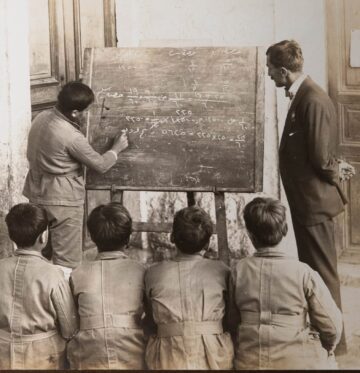
Daily life was organized around care, school, and shared work. In Harpoot, orphanages of about a hundred children were supervised by a local mother and a “big sister,” often a young graduate of the American school. Many younger children lived in family groups, with older girls helping to care for them. Older boys brought supplies, worked in gardens, and chopped wood. Children under fifteen attended school full time and learned to read and write Armenian. Staff searched for surviving relatives and helped families reunite.
In 1922 and 1923, NER evacuated nearly 30,000 children from Turkey to Syria, Lebanon, and Greece. In July 1922, 130 Greek orphans from Diarbekir reached Beirut. Whole orphanages were uprooted, and NER had to establish new homes and schools, organize staff, and restore daily routines while the children adjusted to another displacement.
As the children grew, schooling and trade training prepared them for work. Older pupils entered apprenticeships and began to support themselves, and NER helped former residents find jobs and settle. Their own letters, written in Greece between 1924 and 1930, are in the Christopher Thurber Letters. They describe work, further study, money troubles, and the people they still turned to for help.
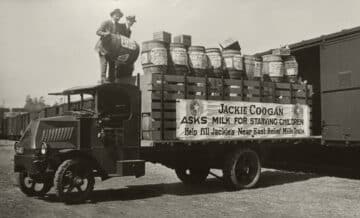
Relief workers took most of these photographs. Some were made for NER’s reports and fundraising, and some captions address American donors directly. Original captions include phrases such as “clamoring for admission” and “rescued from Turkish harems.” We keep those captions as historical evidence and write our own descriptions in plain, current language. Few of the children are named. Where a record names a child, we use the name.
The eighteen photographs shown here come from eleven collections held in the United States and Lebanon. Explore the full Orphanages collection in our digital archive. If you recognize a person or place, or find language here that should be reconsidered, please write to us.