
1915–1930
Growing Up
Near East Relief cared for 132,000 children in a vast orphanage system. The number of orphans was a testament to the brutality of the Genocide: many parents left their children behind during deportations in hopes that the children would survive. A generation of these children grew up in Near East Relief’s care.
January 1919
The Youngest Survivors
As World War I drew to a close, Near East Relief turned its attention to the thousands of refugee children scattered across the Anatolian Peninsula. Through careful budgeting, Near East Relief determined that it could feed each child for $0.17 per day.
The organization set out to raise an unprecedented $30 million for direct relief.
1921–1922
Near East Relief Orphanages
By February 1921, Near East Relief was operating dozens of orphanages in Ottoman Turkey, Syria (including areas in present-day Lebanon), Palestine, and the Caucasus region.
By early 1922, 100,000 children were living in Near East Relief orphanages. An additional 100,000 children living in refugee centers received partial support from the orphanages.
Arrival
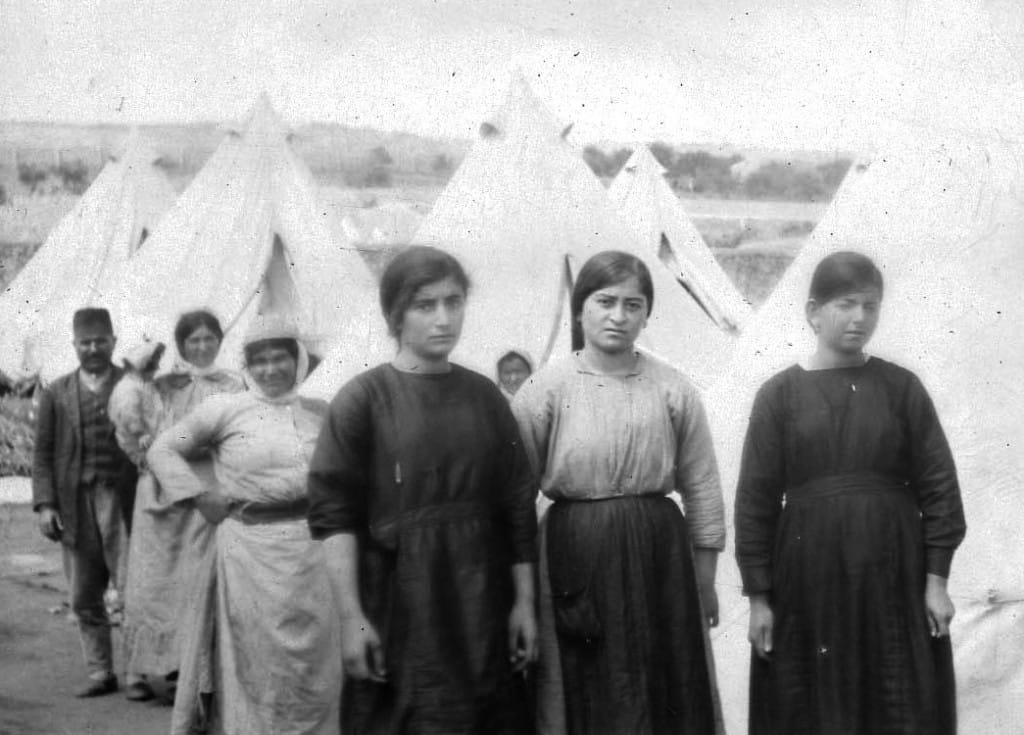
Children arrived at the orphanages in different ways. Near East Relief workers searched for homeless children on the streets and brought them to the orphanages. Some children had been traveling for their entire lives and had no memories of their families, or even of their own names. Some adult deportees left their children by the roadside in hope that the children would be rescued. Many children waited at orphanage gates until there was space for them inside.
The Burning of Smyrna
After the Great Fire of Smyrna, Near East Relief workers evacuated roughly 22,000 children from orphanages in Turkey – about 15,000 of them ferried across the Aegean to Greece, and the rest overland to Syria, Palestine, and the Caucasus. The disaster worsened the already dire refugee situation by displacing approximately 200,000 people.
Sheltering Children
Near East Relief scrambled to find buildings large enough to adequately house all of the orphans. In the wake of World War I, Near East Relief was able to find everything from former palaces (including the Birds’ Nest Orphanage, above) to inactive Russian army bases. Orphanages were densely packed – the complex at Alexandropol (Gyumri) alone housed more than 20,000 children at its peak.
Restoring Health
By 1922 Near East Relief operated 26 hospitals and 48 clinics to care for refugees. Most children arrived at orphanages suffering from severe malnutrition. They also carried the threat of contagious disease. Doctors and nurses worked tirelessly to examine and treat the orphans, helping the children reach a state of health that they had never known in their short lives.
Nourishment
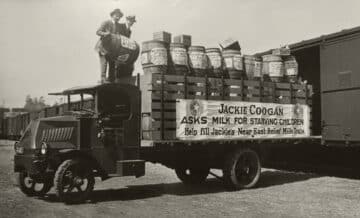
After suffering malnutrition, the children welcomed the simple meals that they ate together – often prepared with ingredients that they grew themselves. Near East Relief orphanages strove to be self-supporting. This included producing as much food as possible to feed thousands of growing children. The focus was on the maximum number of calories at minimal cost per meal. The average cost was $0.05 per child per meal. Donations of food from America supplemented the orphanage meals.
Growth Through Play
Children living in Near East Relief orphanages were encouraged to play and socialize. Physical activity played a vital role in recovery. Toys were scarce, so children played hopscotch or jacks with small stones. Girls made their own dolls out of sticks and scraps of fabric. Boys made trains and trucks from tin cans.
“Rarely have I seen pupils more eager to learn. Although their diet is very simple they looked well nourished, were quickly responsive, and nearly always cheerful. The staff . . . impressed me as deeply in earnest and thoroughly interested in the work they were doing.”
Learning a Trade
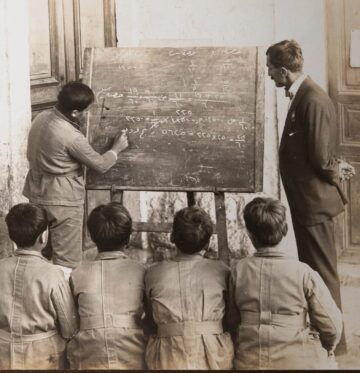
Near East Relief trained orphans so that they would be able to earn a living after graduation at age 16. The orphanage schools offered classes in more than 40 trades. Training programs were based on local needs and resources. Children usually began working half-days at age 12. Older teens worked full days and took classes at night.
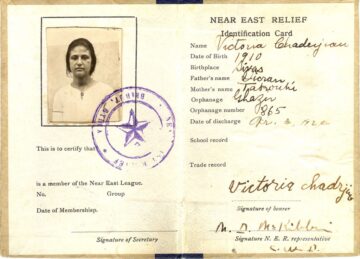
Orphanage identification card from Ghazir Orphanage. This card was donated to the Near East Foundation archives by its owner, Victoria Chadrijian Palian. It is the only one of its kind in the Near East Foundation archives.
Graduating from the Orphanages
Orphanage graduates joined the Near East League, an alumni group that helped the young adults to socialize and to find work. Graduates often married one another. A thriving diaspora grew wherever these young survivors settled — the cities of Beirut and Cairo, the farmlands of Macedonia and France, and even the distant United States.