
Dispatches
Dispatches are stories from the Near East Relief archive. Each one draws on photographs, documents, maps, and contemporary accounts to reconstruct a place, person, institution, or campaign from NER’s history. Together, they show how Near East Relief worked on the ground and how its efforts affected survivors, relief workers, and communities across the region.
Browse by theme to explore the people, places, events, archival materials, and institutions connected to Near East Relief’s work and legacy. New Dispatches are added regularly, so please check back often.
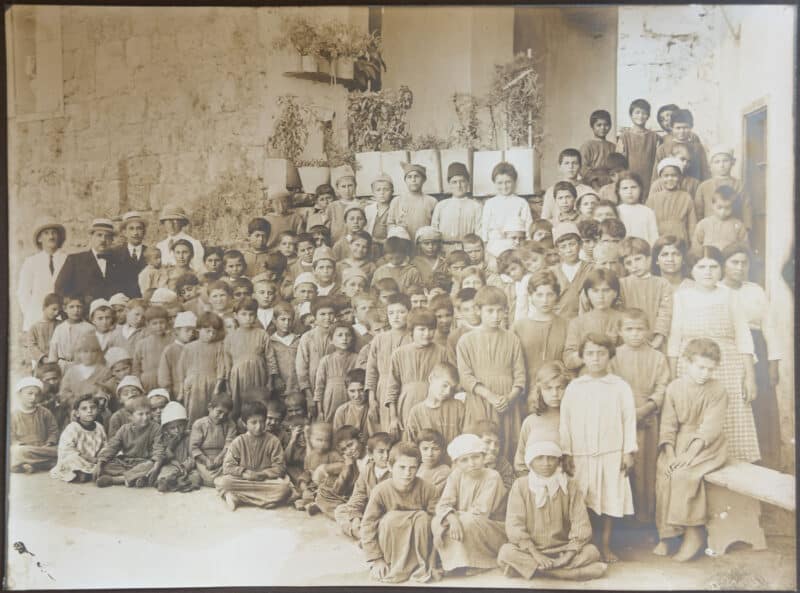
Persia, 1914–1925: U.S. Consular Reporting on the Armenian and Assyrian Genocides
The U.S. consular records of Persia document a quarter-century in which Assyrian and Armenian Christians in the country’s northwest were repeatedly caught between Ottoman, Russian, Kurdish, and Persian forces, and in which American diplomats became, by default, the principal humanitarian...
Baghdad, 1917–1923: U.S. Consular Reporting on the Armenian and Assyrian Genocides
In late summer 1918, Jacob David joined the mass exodus from Urmia in northwestern Persia. His wife, Judith, and their three children stayed behind to safeguard the few Assyrians who remained in the area. Presbyterian missionaries had educated him in...
The Smyrna Catastrophe
By the morning of September 13, 1922, the long unraveling of the Ottoman Empire had reached the waterfront of Smyrna. A fire that began in the Armenian quarter of the city that day would consume two-thirds of Smyrna within a...
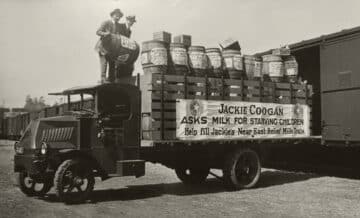
Citizen Philanthropy: Say It With Flour!
In the early 1920s, Syracuse grocers might invite a customer paying for groceries to drop a measure of flour — or a silver dollar — into a barrel beside the counter. The donation would travel by railcar to the Black...
Syra: The Island Orphanage
In the summer of 1923, several thousand Armenian and Greek orphans stepped off boats onto the dock at Syra, a small island in the Cyclades. They would spend the next year living in tents, digging wells, and helping to build...
Susan B. Anthony’s Nieces
Among the relief workers who sailed for the Near East in the first months of 1919 were two sisters from Berkeley, California: Gertrude Anthony, a 46-year-old teacher of biology and botany, and her sister Amy, a 50-year-old trained nurse. They...
Constantinople, Part 4: Saving the Children
By the summer of 1922, Near East Relief was supporting approximately 10,000 orphaned children across more than twenty institutions in Constantinople. They were Jewish, Greek, and Armenian. They lived in former palaces, rented buildings, and on the Princes’ Islands. NER...
Constantinople, Part 3: Saving Lives at Selimieh
On the Asian shore of the Bosphorus stood the Selimieh Barracks, an Ottoman army facility dating to the late eighteenth century. By the summer of 1922, it held more than 9,000 refugees. Christopher Thurber, a NER relief worker newly arrived...
Constantinople, Part 2: Refugees in Peril
Near East Relief is best remembered for its orphanages, and the photographic record from those institutions has shaped institutional memory ever since. The Constantinople of the early 1920s tells a wider story. By 1921, the organization was running soup kitchens,...
Constantinople: Queen of Cities
At the start of the twentieth century, Constantinople sat at the meeting point of Europe and Asia, capital of an empire that had governed parts of three continents for six centuries. Armenians, Greeks, Sephardic Jews, and Levantine Christians lived in...